








Why do we sometimes see lone Bear Cubs in Autumn?


Clockwise from upper left, Mama Grizz with 2 cubs in Yellowstone, May 2016, Mama grizz with cub in Teton, May 2018, young grizzly in Denali Nat'l Park in Alaska, May 2012,
and Yellowstone black bear with collar and ear tags, May 2018, all by Steve Hall, Luvey, one of 2 Wildlife Refuge ambassador cubs by Joe Kostoss,
| Barnabee, a Rehab Black Bear,
Nursing Her Cubs |
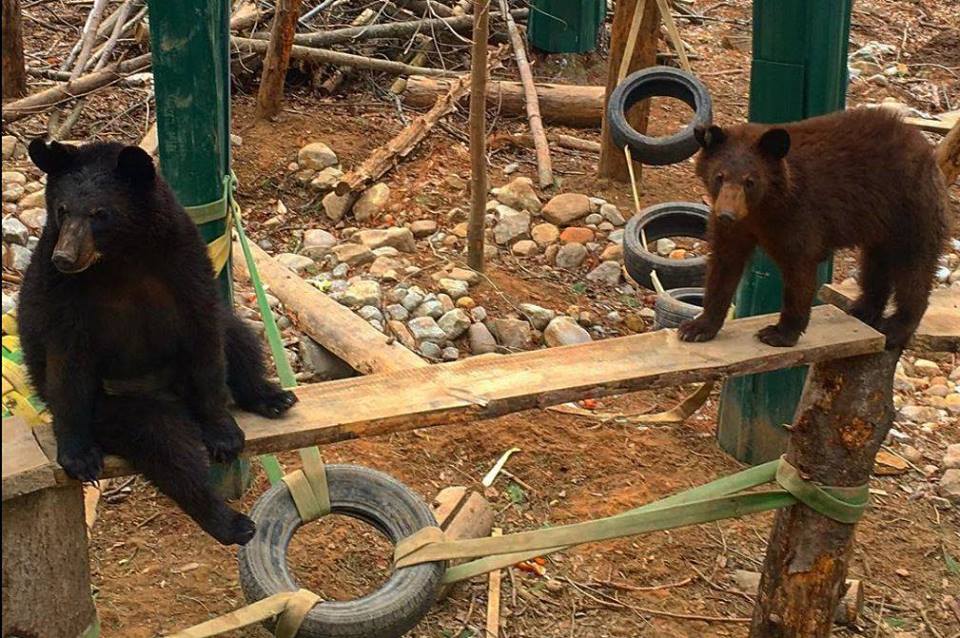
Come meet our ambassador black bears, Luvey and Ahote, at the Adirondack Wildlife Refuge. Photo by Hanna Cromie.
| The Unusual Life of Barnabee the
Bear |


Adirondack Black Bear by Deb MacKenzie, 2012, stopping a spinning watering source to get a drink.
|
"Exit,
pursued by a bear."
Shakespeare, Winter's Tale |
 Black Bear: Ursus americanus Grizzly Bear: Ursus arctos horribilis Order: Carnivora Family: Ursidae Genus: Ursus Appreciating
Bears through the Seasons Published through
Adirondack Almanack at http://www.adirondackalmanack.com/2015/04/appreciating-bears-through-the-seasons.html#more-53143 Our
nightmare vision of the grizzly
prowling just outside the dissolving glow of the camp fire’s light, or
the fear
that we’ll lose our vegetable garden or livestock or trash barrels to a
marauding black bear, is balanced by the almost comical and brilliant
attempts
of the bear to figure out how to break into our stored food and trash,
or the
manner in which bears routinely entertain themselves and each other
with the
natural toys and circumstances nature provides, as when we see bears
sledding
on their butts. Curiosity and play are characteristics of higher
mammals,
particularly in predators like humans, wolves and bears, which often
lead to
opportunities to feed one’s self and one’s family. Where
did they come from, and when? The
ancestors of modern North
American bears evolved in Asia during the Pleistocene, wandering over
to Alaska
during several appearances of the Bering land bridge, between the
Bering and
Kamchatka Peninsulas. Advancing and receding glaciers, fueled by
evaporating
sea water, caused ocean levels to alternately drop and rise, exposing
and
submerging the Bering Strait. The common
ancestor of american black
bears and asiatic black bears came across half a million years ago, and
it is possible
that black bears adapted to climbing trees not only to exploit a wider
range of
food sources, but to escape the larger, faster and more strictly
carnivorous
short-faced bear, which, fortunately for us, joined the extinction
parade about
5,000 years ago. The glacially isolated polar bears split off from
grizzlies in
Asia about 130,000 years ago, and followed grizzlies across the land
bridge
about 100,000 years ago. Grizzlies stayed bottled up in Alaska for a
while, waiting
as the interglacial valleys between Alaska and the lower forty-eight
opened and
closed, and also possibly thanks to the presence of the same
short-faced bear
in the areas that became Canada and the U.S. These
factors set the pattern for survival for each species:
black bears tend to retreat, often up trees, while the heavier,
stockier
grizzly, evolving in the more open tundra and taiga, areas with fewer
and
smaller trees, developed the best-defense-is-a-great-offense approach
to
survival. How many
are there, and where are they found today? There are
about 500,000 black bears
in North America, probably 7,000 across their currently expanding range
in New
York State, with more than half of these within the Adirondack Region,
about a
third in the Catskills, and most of the balance expanding across
Central and
Western New York. Hunters took 1,628 black bears in New York State in
2014. Black bears
are the only bear found
uniquely in North America, and they tend to live where there is forest
and
vegetation for cover, and swamp, as in the east, or in the mountain
areas out
west. As with a slew of other mammals, bears have learned that while
human
beings mean hunting, in many areas, they also mean food and sustenance,
particularly when the bear’s natural sources of food fail, as when
drought
wiped out the Adirondack berry crop in the summer of 2012, driving so
many
bears into camp sites and back yards. There are
about 60,000 grizzly bears
in North America, sweeping across Alaska, the Yukon and the Northwest
Territories, spilling down the extensions of the Rocky Mountains,
through
Alberta, Saskatchewan and British Columbia, through Montana and Idaho
into
Yellowstone, with a diminishing presence on the surrounding prairies.
The
principal difference between inland grizzlies and the Alaskan coastal
brown
bears are the rich salmon diet of the latter. Why
you should never feed a bear Bears are
opportunistic, omnivorous
feeders, creatures of habit, who will continually revisit areas where
they have
found food in the past, whether those food sources are natural, or
provided by
human activities. With regard to the latter, this is why it is almost
always a
mistake to feed a bear: if you’re camping out in the High Peaks, and
you
purposely or inadvertently provide food for a foraging black bear, you
pretty
much guarantee that the next camper will have to deal with that bear’s
expectation that humans mean food. Similarly, because we experience
bears as
large and intelligent mammals, sometimes frightening and sometimes
entertaining,
we have a natural tendency to sympathize with their plights,
particularly in
the case of orphaned cubs and yearlings. Mature bears
are unique among the
larger North American mammals in that hunting is their number one cause
of death.
As with most other wildlife at any age, starvation is the main cause of
mortality among cubs and yearling bears. At the same time, bears, like
deer,
have discovered that suburban America is not only a great place to
forage for
food, but relatively safe from hunting, as local laws tend to forbid
firearm
discharge within 500 feet of a dwelling. Black
Bears Black Bear
boars range from 150 lbs.
to 550 lbs., with 300 lbs. being about average, while sows range from
90 to 300
lbs., with about 170 being the average. Black bears live to about 15
years in
the wild, and sometimes twice that in captivity, when their number one
challenge in life, food, is removed as an issue. Black bears walk
pigeon-toed,
but can run up to 30 mph. They’re characterized physically by shoulders
large and
powerful, though lacking the thick knot of muscles grizzlies have
between their
shoulders, and a straight facial profile which is often described as
“roman”,
as opposed to the grizzly’s more dish-shaped profile. In addition
the black bear’s dark
claws are shorter and more curved, adapted to climbing, while the
grizzly’s
claws are longer, less curved, lighter shaded and adapted for digging
out
rodents and plant tubers. A black bear’s paws are considerably more
dexterous
in manipulating objects than their appearance would suggest, and their
ears are
larger and more clearly defined than those of the grizzly. Black bears
mark
their presence by biting and clawing trees, rubbing their backs up and
down on
tree trunks, and by a peculiar stiff-kneed weight pressuring of their
front
paws into the ground, leaving nearly perfect prints. Bears have
the most sensitive
mammalian nose, more sensitive than even wolves. They have better
hearing than
people possess, and black bears apparently have sufficient color vision
acuity,
that, according to Jeff Fair, in “The Great American Bear”, they can
recognize
rangers in the Smokies by uniform and by car. Black bears, like
grizzlies, come
in various shades, from the predominant black of the eastern black
bear, and
occasional cinnamon in the Midwest, to sometimes brownish out west in
grizzly
country, a convenient evolutionary adaptation to resemble their more
imposing
grizzly cousin, to the blondish and whitish bears of British Columbia,
the
famous spirit, or ghost bear, the Kermode bear. Territory Bears are
not as strictly
territorial as wolves are, and their territories vary by gender,
availability
of food, time of year, and the presence of tolerant neighbors. Females
are more
territorial than are males, and sows’ territories are often bordered by
the
smaller territories of their dispersed daughters. Dispersal is what
takes place
when yearling cubs are booted out of their mother’s territory by an
eager-to-mate-again Mom, sometime in June after some of her cubs may
have spent
their second winter with her. Some Adirondack cubs disperse before that
second
winter. Bear “family life” is essentially about mom and cubs. Once a
young male
has been booted from Mom’s territory, or dispersed on his own during
their
second spring, his only future interaction with sows will be during
mating
season. Territory
defense has more to do
with protecting food sources against other bears than, say, the danger
to cubs
of wandering male bears (a danger more characteristic of grizzly
bears), so
allowing her daughters to stake out adjacent territories gives Mom an
effective
buffer zone against general food poaching by strangers. Average female
territories in New Hampshire and Maine are about ten square miles,
while males
may cover anywhere from 15 to 70 square miles. Male yearlings are more
apt to
wander around in search of their own territory, but territories are
commonly
violated by the presence of short-term seasonally available food in any
given
area. Through
the Seasons – Pre Hibernation Bear
activity is driven by the
seasons, particularly with respect to food availability, mating and
giving
birth. The bear’s specific form of hibernation is what really
distinguishes bears from other mammals, so we’ll start with the bear’s
activities during late summer and autumn. Since bears don’t eat while
hibernating, they go through a period of “hyperphagia”, or overeating,
in Fall,
gradually increasing their consumption until they spend about 20 hours
a day
eating, consuming, for example, American mountain ash berries, black
cherries,
mountain holly fruits and hazelnuts, gradually switching to wild apples
and
raisins, arrow wood, and finally that “hard mast”, beechnuts and acorns
in late
September and October. Out west the
hard mast consists of
white bark pine nuts. A larger than average hard mast harvest
will result
in fatter bears, which in turn will result in more cubs born to
pregnant sows
during hibernation. If the following year features droughts, this will
result
in thinner food yields, and too many cubs trying to feed themselves on
too few
berries, acorns, etc., as Nature adjusts the balance of supply and
demand. You
may have spotted a “bear’s nest” in a beech or oak tree, where a black
bear has
climbed out on a limb, reaching out and pulling in to him the nut laden
branches. Prior to hibernation, it is literally true that a fat bear is
a
healthy bear, and they’ll go from consuming 5 to 8 kilocalories a day,
to up to
20. A bear is
ready to hibernate when a
trigger-like physiological mechanism causes the bear to gradually stop
eating
and drinking, as their body begins to metabolize the fat they’ve been
building
up. They walk around in a kind of pre-hibernation daze, looking for a
location
to den up. For pregnant sows, this may begin in late September,
followed by
sows with first year cubs born the previous January, and finally barren
sows.
Boars may not begin hibernation till late October or November. Curiously,
it has been reported that
some boar grizzlies in Yellowstone may skip hibernation, as wolves are
apparently
such good providers of left-overs, the grizzlies can appropriate
abandoned or
inadequately guarded carcasses. Unlike your dog, wolves have to
navigate
between high food availability and no food availability, so when the
pack
succeeds in killing an elk or moose, the wolves will gorge themselves,
eating
up to 20% of their body weight in one sitting, becoming “meat drunk”.
Recall
last Thanksgiving dinner, how you fell asleep on the couch during the
second
quarter, and you’ll get the picture. Yellowstone grizzlies may be able
to
access enough protein to avoid hibernation altogether. This is a risky
approach, however, as successful denning is based on metabolizing fat,
not
protein, so the grizzly may find himself in trouble if midway through
winter,
his carrion food supply is seriously diminished. Denning
and Hibernation Dens may be
caves, hollows in trees,
an excavated hollow under a fallen tree’s root base, under the porch or
foundation of a seasonal cabin, and for some boars, just a clearing
with sufficient
wind break surrounding it, and a snowy blanket to augment the bear’s
winter
coat and keep the bear warm. Pregnant sows, and mothers who sometimes
have
yearling cubs with them, naturally seek those dens with more security.
Bears
may gather and line the dens with fallen leaves, pine boughs, and other
materials to make for a more comfortable and well insulated bed. Hibernation
may be defined as the
seasonal reduction of metabolism, concurrent with reduction in food
availability and temperature. In short, just as birds of prey migrate
not
because of the cold, but because the hibernation of many prey animals
deprives
them of a survival-enabling quantity of potential prey, so the main
reason
bears hibernate is as an efficient response to the hardships of feeding
oneself
during winter. Bears are
sometimes described as not
“true” hibernators. This is because while their heart rate may slow
down from
50 beats per minute to about ten during hibernation, their body
temperature
only drops about 12 degrees, whereas the body temperature of most
hibernating
mammals may drop to a few degrees above freezing. On the other hand,
while
bears may indeed rouse, and walk around during balmier winter days,
they can go
through their entire hibernation without having to urinate, defecate or
ingest
food, while the “true” hibernators have to do all these things from
time to
time, during hibernation. The reason
for this is that bears
spend their hibernation burning the fat they ingested during
hyperphagia,
shedding 25 to 40% of their body mass, but not lean body mass, such as
muscle
tissue, bone and protein. I can picture the late night TV ads already:
“SHED
WEIGHT WHILE HIBERNATING…. er… SLEEPING!” All kidding aside, medical
research
is very interested in understanding bear hibernation because of the
many
possible human medical applications, which include gallstone treatment,
kidney
disease, muscle cramping, bone calcium loss, renal disease,
anorexia,
skin regeneration and suspended animation. Imagine future astronauts
traveling
to distant planets while in a state of hibernation. Metabolizing
fat produces more
energy and water, but less urine, which ends up being recycled anyway.
Urea in
the blood is converted into CO2, water and ammonia. During a process
termed
“nitrogen shuttle”, ammonia and glycerol produce amino acids and
protein. Three
grams of urea nitrogen becomes 21 grams of protein, enough to develop
one cub.
The period of hibernation is a function of latitude and climate, such
that
while a Florida black bear may hibernate for only two months, one in
the Yukon
may do so for up to seven months. Winter
and the Birth of Cubs What all
this process means, in
effect, is that hibernating sows give birth during a period of virtual
starvation. Bears mate in late June or early July, and sows are
promiscuous by
nature, sometimes mating with a number of boars, such that cubs of the
same
litter may have different fathers. Sows experience delayed implantation
of
blastocysts, becoming pregnant only after they have successfully
prepared themselves
for hibernation through hyperphagia. The blastocysts of a
starving sow
will dissolve, thus preventing the added stress of giving birth to an
inadequately prepared sow. While
litters of two cubs are
typical, in areas of abundant food, sows may produce up to six cubs,
each
weighing about 12 ounces. Mama’s milk, delivered through six
nipples, is
25 to 30% fat, low in carbohydrates, and high in ash, calcium and
phosphorous.
Orphaned and abandoned cubs may be successfully placed with nursing
sows at this
age. The cubs grow quickly, even as Mom continues to shed body fat, and
will be
about ten pounds by April. Spring
Fever When Mom
leads her cubs out of the
den in spring, she continues in a state of biochemical narcosis, still
metabolizing fat, while losing weight, and nursing her cubs, who are
growing
rapidly. After a week or so, mom starts foraging, finding squirrel
caches left
over from winter, eating grasses, skunk cabbage and fiddleheads,
teaching her
cubs what to eat and where to find it. Catkins, roots, corms, early
fruits and
leaves, vegetation low in woody cellulose, round out the spring diet.
Carrion,
the bodies of animals killed by winter, as well as any deer fawns or
moose
calves the bears come across while foraging, bring much needed protein,
as do
ants, ant pupae, yellow jackets and bees, which appear on the menu in
June. Summer
Romance Summer
brings mating season and the
soft mast of berries. Sows which still have yearling cubs with them,
are
anxious to mate again, and begin rejecting their cubs. At this point,
the cubs
have spent more than a year learning the ropes from Mom, and are ready
to take
care of themselves, a condition Mom encourages by displays of
impatience,
charging her cubs when they try to follow her, and making it clear she
wants
her shadowing offspring to leave her alone. Siblings may eventually
wander off
together, and learn while foraging together that companionship is
great, except
when a shared limited food source means not having enough to eat, which
may
lead to the siblings striking out on their own, with females trying to
establish territories adjacent to Mom’s, while males look for
territories not
dominated by larger males. Males detect
females going into
estrus in late June and early July, and may begin tailing prospective
females,
waiting for signs of receptivity. The boars may forage and feed
alongside their
prospective sow, waiting for her to signal readiness, also fending off
approaches by other males, who may test their resolve with respect to a
particular sow. Much of this effort may be wasted, as sows are
promiscuous, and
may end up mating with more than one male anyway, with the interesting
result
that litters may have multiple fathers. Copulation may last up to 30
minutes. Meanwhile
the berry crops start
bearing fruit, pin cherries, sarsaparilla berries and blueberries in
July, and
red raspberries, choke cherries, blackberries and dogwood fruits in
August. In
good years there may be plenty of soft mast for everyone. Just as
Alaskan brown
bears flock to salmon streams, and tolerate the presence of other
bears, and
even human fisherman, thanks to the numbers of migrating and spawning
salmon,
so a rich crop of soft mast may find black bears eating these berries
exclusively for many days, often within sight of one another. Keeping
Bears away from Homes and Camp Sites How do you
keep bears out of your
camp site? In the case of camping in the High Peaks of the Adirondacks,
they’ve
made it academic: you must have with you an approved bear canister for
food
storage. More generally, never cook or store food anywhere near where
you plan
to lay out your sleeping bag. If you’re staying in a lean-to or tent
next to a
campfire, don’t cook over the campfire, as the odor of dripping fat and
grease
will be just as attractive to the bears, as actual food will be. For
the same
reason, heat food over your portable camp stoves far from the sleeping
area. Before the
canister law, folks in
the high peaks would typically store all food, as well as implements
for eating
and cooking in a bag, which would be hung from a branch high
enough, and
far away enough from the tree trunk, and far from the sleeping area.
Better to
watch the bears at a distance, figuring out how to reach your suspended
food
cache, than to have them in camp with you. If black bears are attracted
to your
campsite anyway, bang pots together, clap hands, yell at them, shine
lights at
them, in short, make their fear of your noisy dissuasion overcome their
attraction to the odors of food. How do you
keep bears out of your garbage and garden at
home? For the former, use approved bear-proof garbage containers, like
the ones
pictured. Only place your pet food bowls outside while your pets are
actually
eating, and only hang your bird and suet feeders during winter, when
the bears
are hibernating. You shouldn’t be feeding birds during the other three
seasons
anyway, as they have to learn to forage and store food, if they’re
going to
survive during periods when you’re not feeding them. Keep the compost
pile far
from the house, as it will absolutely attract bears, or locate it next
to the
vegetable garden, and use a solar electric fence to surround the
garden,
compost and any bee hives you keep on your property. Are
Bears dangerous to people? I once heard
George Carlin open a
set by saying that “you never hear about a bear until he bites
someone”, and
the audience laughed like that was the funniest thing they had ever
heard, when
in fact, it was an accurate description of how our media works. This
isn’t
about any particular political point of view. It’s simply a reminder
that all
forms of media face the challenge of attracting and retaining readers,
viewers,
whoever, and they often do so by taking the exceptional and wildly
improbable,
and presenting it as the state of expectations. Let’s face
it, we want to be
frightened. We want to say, “that could have been me”, or to
paraphrase
Carlin, nobody wants to read a story that tells us 50 million people
landed or
took off safely in jets from Kennedy airport last year (which is
accurate). They
just want to read about the jet that crashed, or in general, about
human
misfortune. Think “Bart the Bear”, and any of his movies, or “The
Grey”, that
ridiculous movie about clunky-looking wolves attacking plane crash
survivors,
in which even the story line makes zero sense, and is merely employed
to set up
the carnage that follows. There are
about one to three fatal attacks
by grizzly bears on people in North America in any given year, with the
average
over the last century being two. Most attacks are related to surprising
a
grizzly, either a sow protecting her cubs, or a bear protecting the
carcass of
an animal that it is consuming. While the very thought of an attack by
a bear
is quite terrifying, the logical question should be, how many people
see bears
up close in any given year? This is a
very large number. Using
just Yellowstone National Park, the only Park for which I could locate
stats,
in 2008 alone, over 1,000 people reported seeing grizzlies, which
likely means
that five times that many saw grizzlies and didn’t report the sighting
to any
authorities, like rangers, etc. Over the
last 25 years, I’ve seen
many grizzlies, some in National Parks like Denali or Banff, some at
private
camps like Knights Inlet on the B.C. coast, and many of them fairly up
close,
where one of the bear’s options was to whack me, including the one in
Denali three
Springs ago, whose photograph appears above. When it comes to
black
bears, millions of people see black bears each year, and yet, there is
a fatal
encounter about once every four years. In fact, your chances of being
killed by
lightening or a spider bite, or an attack by a dog, are very much
higher, even
in bear country. When it comes to bear encounters, think statistics,
not scary
anecdotes, which play into our deepest fears, and if you’re truly
interested in
bear attacks as a social phenomenon, read the Stephen Herrero book,
“Bear
Attacks, Their Causes and Avoidance”. The only
physical attacks by a black
bear in the Adirondacks that I am aware of, was the September 2013
incident on
the Placid Northville trail, when a female hiker was followed by three
bears,
until one got too close, and she stabbed it with her knife. I don’t
know
whether this courageous young woman was carrying food, or whether the
incident
was driven by the bears’ natural curiosity. There was an incident in
the
Catskills years ago, when an infant was snatched from a carriage left
outside
at a camping area known to be frequented by bears. When you measure
these
stories against how many of us have seen bears up close in the
Adirondacks,
it’s pretty clear that bears will flee most of the time, and decide to
pursue
physical contact almost never. I’ve never felt the need to carry pepper
spray
in black bear country. What’s
the safest protocol when meeting a bear? So… what
should you do when you see
a bear? Well, for starters, get your camera ready. Never run, as the
slowest
bear in history, is faster than Usain Bolt, the Olympic sprinter.
Contrary to
Hollywood movies, when a bear stands up to look at you, they’re first
trying to
figure out what you are, so they get nature’s
most sensitive nose higher in the air, doubling or tripling their
olfactory
range, in the hopes of identifying you. Grizzlies are obviously more to
be
concerned about than black bears, so if a grizzly stands and looks at
you, but
doesn’t get down and leave, this may mean he can’t figure out what you
are. If
you’re wearing a hat, gently waft it in the bear’s direction, so that
he can
smell that you are a human being. If a black bear feels threatened, it
may
initiate a series of bluff charges, which will almost certainly end in
the bear
veering off. Chomping or clacking the jaws is generally also a bluff,
but with
grizzlies, may very rarely be followed by a charge ending in contact. Many folks
carry firearms in bear
country, but in the rare case of a grizzly attack, some people have
been killed
by the bear they just shot. I prefer carrying pepper spray in grizzly
country,
because a face full of pepper spray, literally turns you into super
skunk in
the bear’s eyes. The key with pepper spray is to wear it on your belt,
and
obviously have it in your hand, ready to use, the second it becomes
clear that
the bear may choose contact. Wearing “bear bells” on your pack in
grizzly
country, may lessen the danger of surprising a grizzly at close
quarters, as
they will hear you coming, and likely flee the scene. Seeing a
bear in the wild is an
exhilarating experience you’ll remember for the rest of your life.
Never
approach a bear for that closer shot, as some grizzly attacks followed
the
bear’s perception that you didn’t just happen to be there, but were
actively
following them. If you unexpectedly find yourself near a bear, and the
bear
shows agitation, like swiping at the ground in front of them, emitting
a loud
“woof” sound, or engaging in bluff charges, never run, as this invites
pursuit. You are not
the bear’s natural prey,
and you want what the bear wants, peaceful and dignified disengagement,
so speak
clearly but gently to the bear, to let it know that you’re aware of
their
presence, and that you are not a threat. Never stare at the bear, as
this may
be taken as a confrontation, but also never turn your back. If you can
safely
back away, while still looking in the bear’s general direction, they
will likely
take that opportunity to flee. Suggested
reading for bear lovers: Benjamin Killam: Among
the Bears, and Going Out on a Limb; Jeff Fair: The Great American Bear;
Stephen
Herrero, Bear Attacks: Their Causes and Avoidance; Dave Taylor: Black
Bears: A
Natural History, all available through Amazon. Best web sites: Wildlife
Research Institute: http://www.bearstudy.org/website/;
North American Bear Center: http://www.bear.org/website/ |

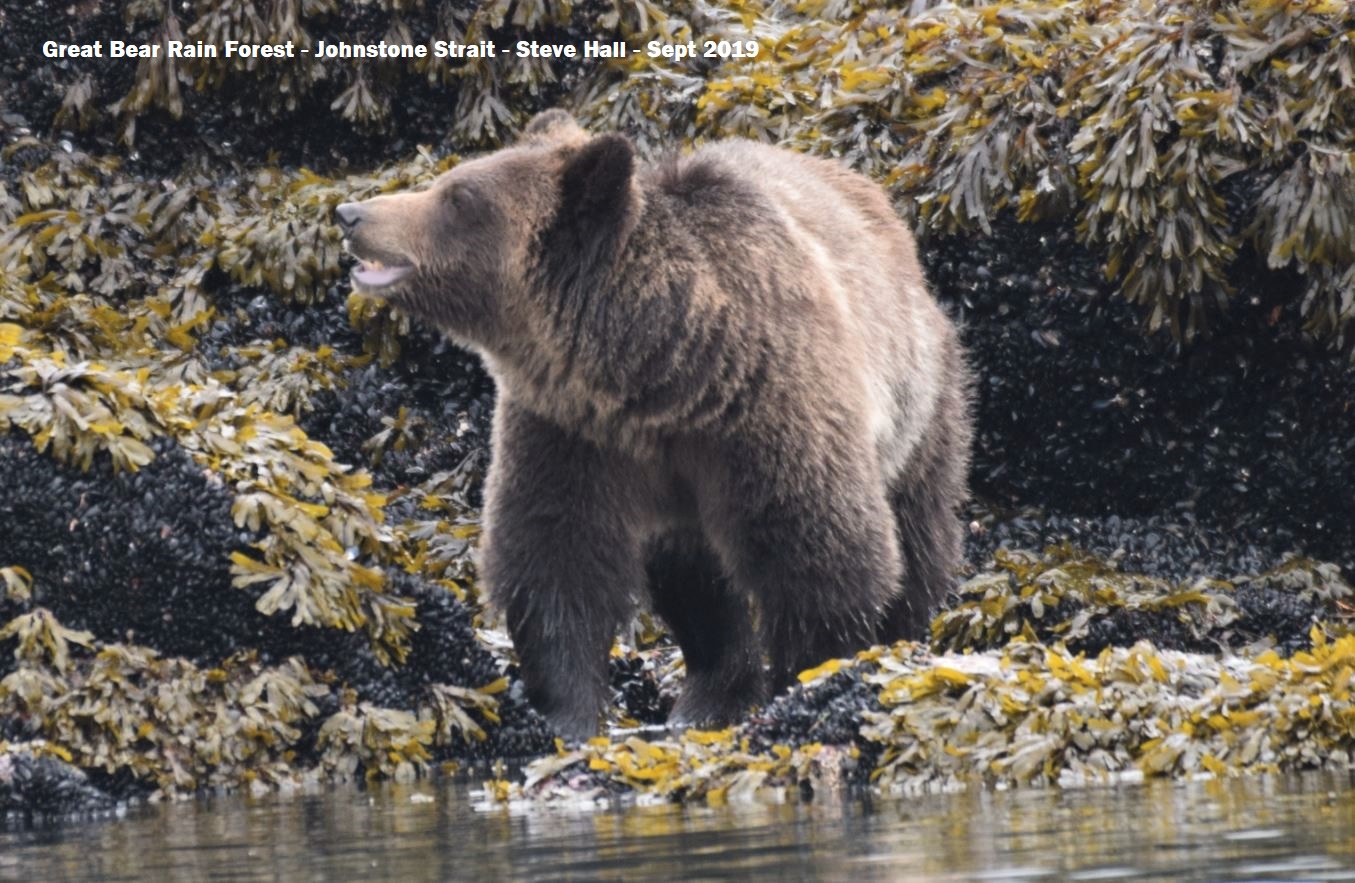
Above and below, Grizzlies in Great Bear Rain Forest, Johnstone Strait, Sept 2019, by Steve Hall.
If the salmon run fails, mussels and barnacles are the main diet at low tide.


Left, expanding black bear range in N.Y., from the DEC, and physical comparison of black bear vs. grizzly.
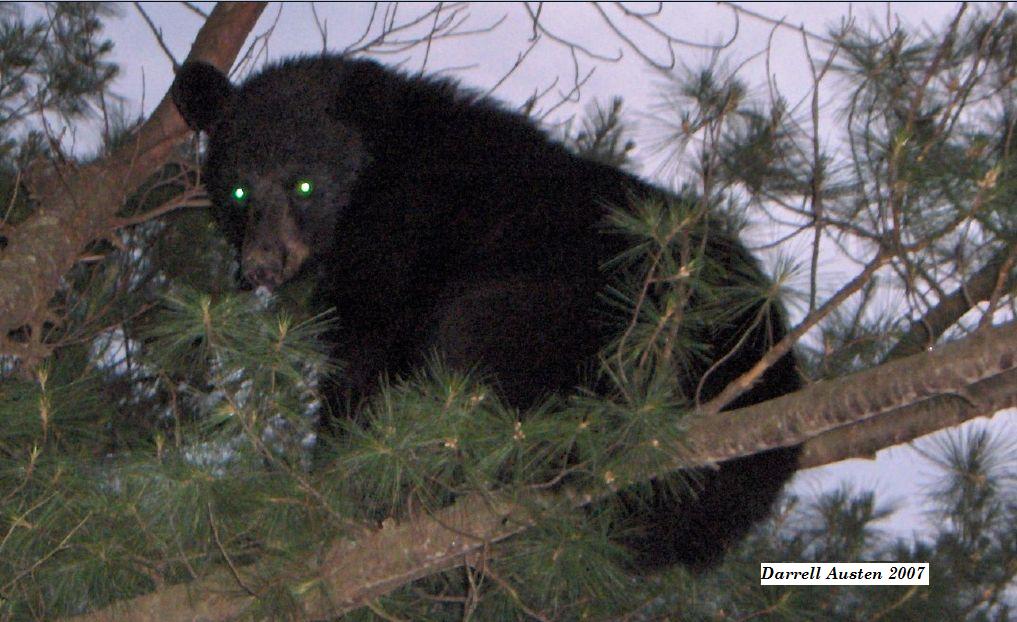
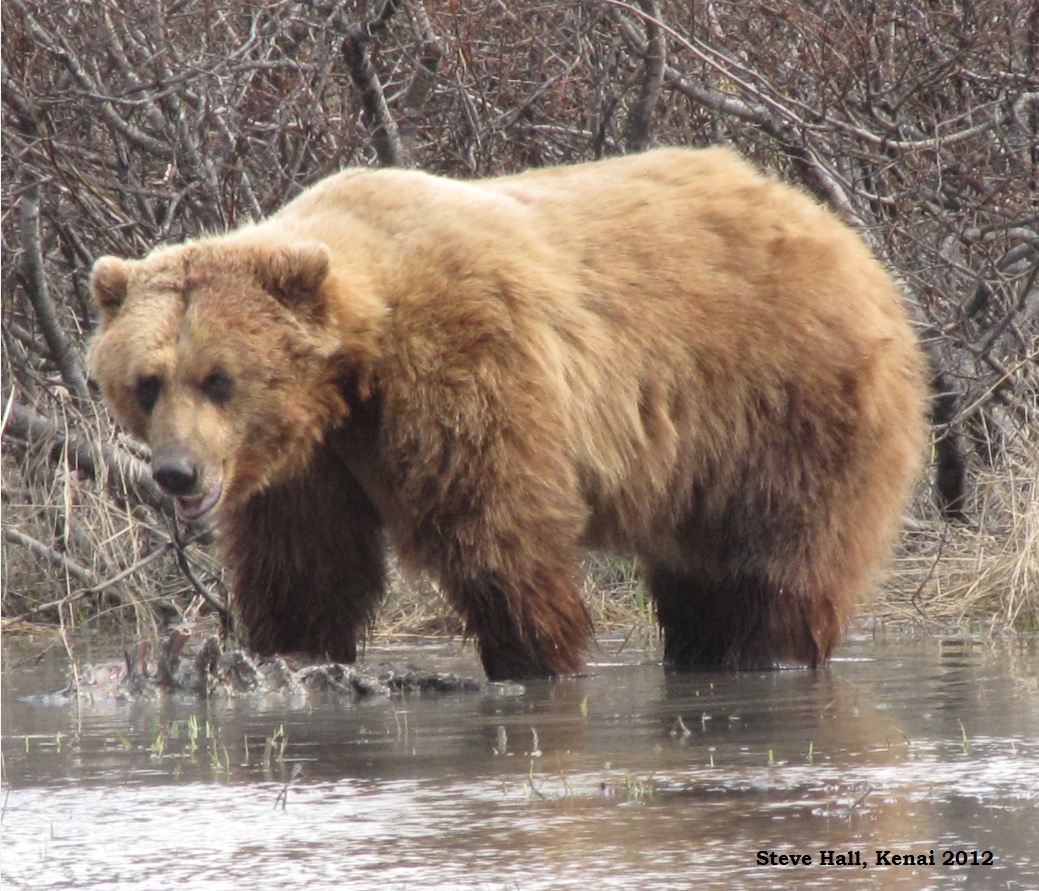
Adirondack Black Bear by Darrell Austin, left and Alaskan Brown, in Kenai, Alaska, May 2012, by Steve Hall

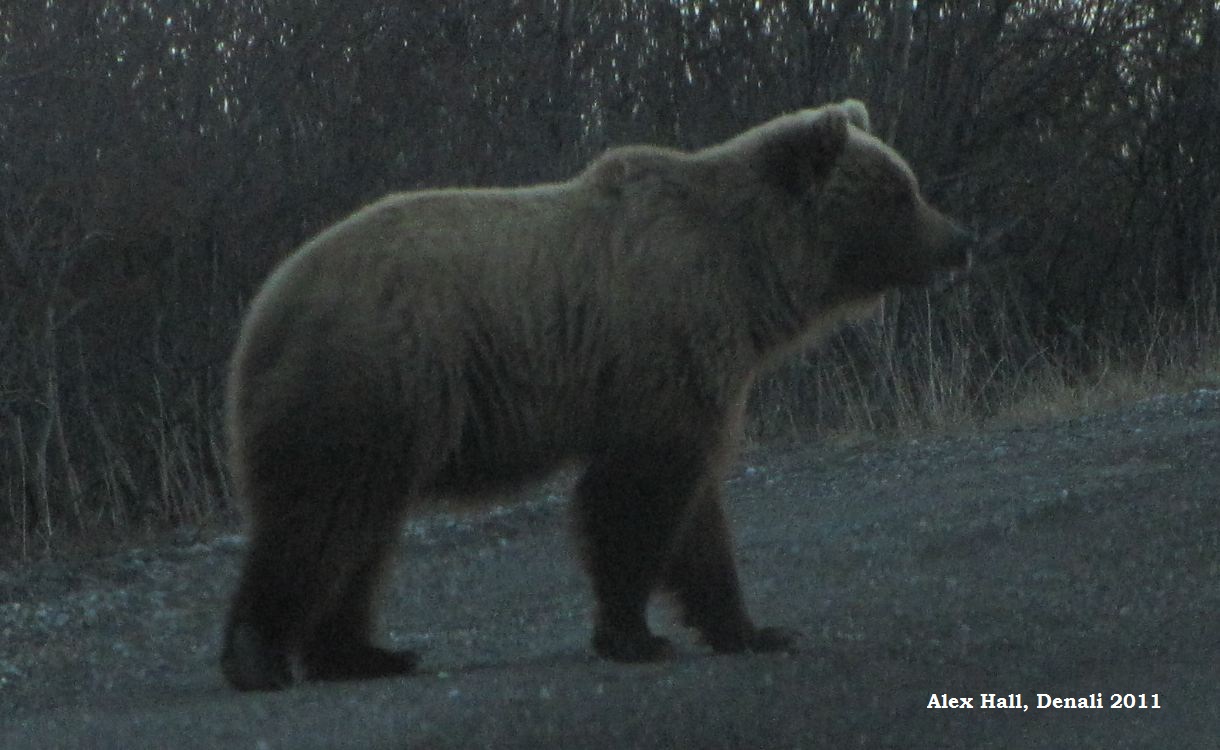
Denali Grizzly, by Alex Hall, May 2011


Yellowstone black bear by Alex Hall, May 2013


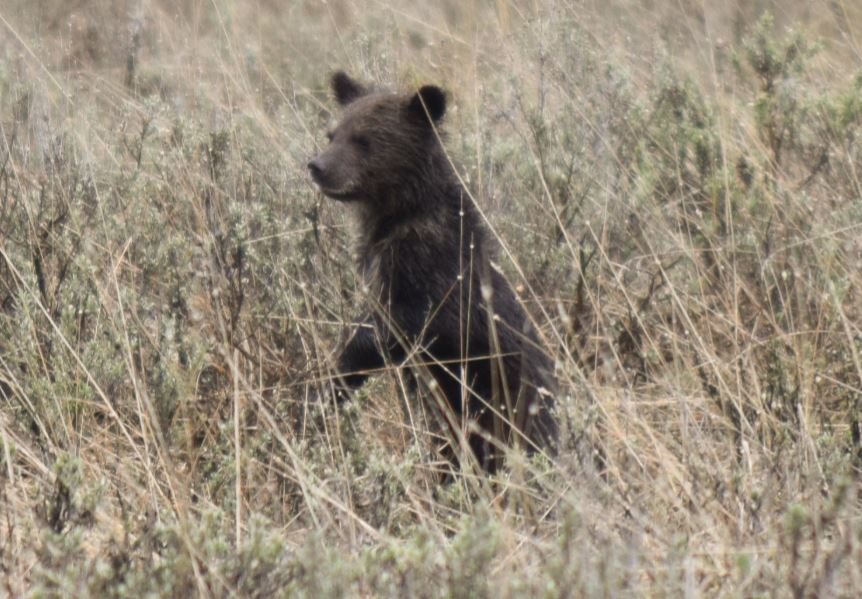
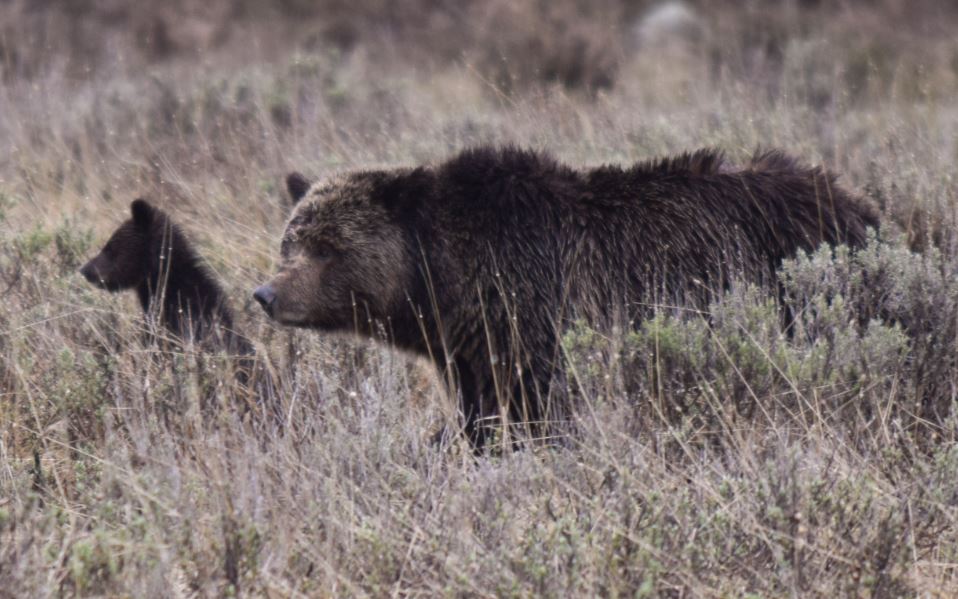
Yellowstone grizzly bears by Steve Hall, May 2016: sow with 2 cubs.


L to R: Black bear sow with yearling cinnamon cubs, May 2016, Yellowstone, & treed Black Bear cub, by Steve Hall


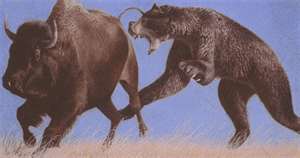
Short-faced bear, a Pleistocene predator, fortunately for us, now extinct.
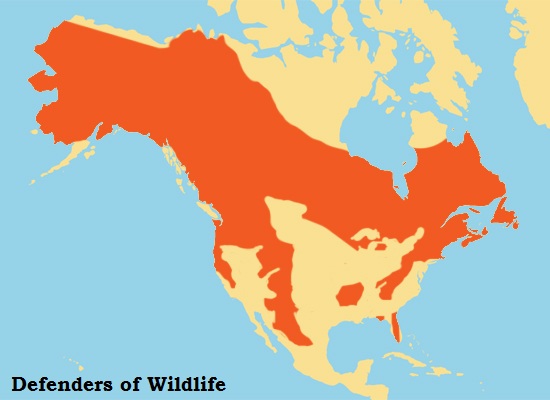
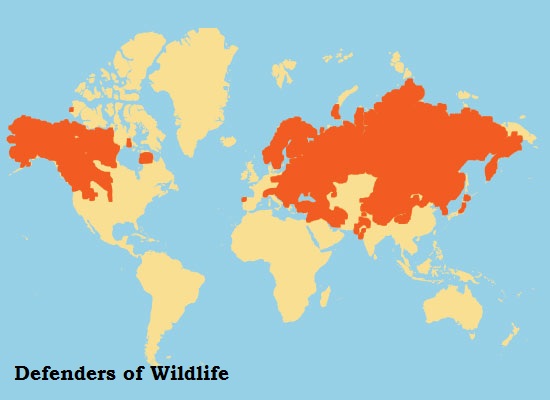

left to right, black bear, grizzly and polar bear ranges, from Defenders of Wildlife.

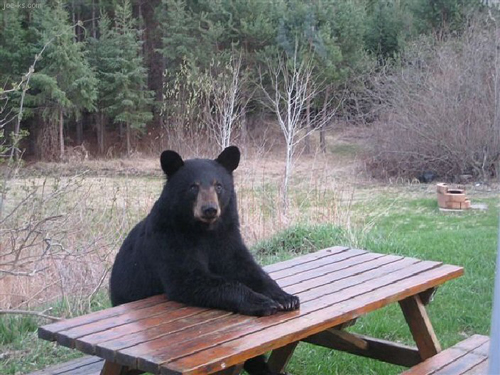
left, DEC biologists radio-collaring "yellow-yellow", world champion bear cannister cracker, and an unwanted picnic guest.

The Great Bear Escape, March 2019.
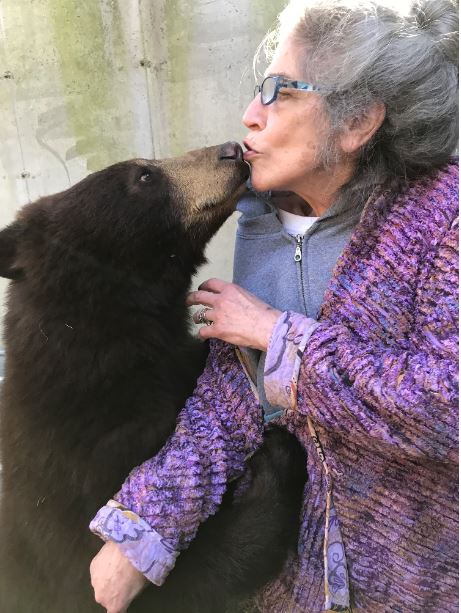
The bears went exploring for 2 weeks, and then Luvey, the brown phase black bear, followed Hanna and Steve home, 4 miles through the woods. 2 days later, Ahote, the black phase black bear, followed Hanna and Caroline 1 mile home to the Wildlife Refuge.


Examples of bear-proof trash barrels being tested. by grizzlies.


Adirondack Wildlife is available to do educational presentations at public venues.


What are we reading? In particular, we found "Great American Bear" very useful for a layman's understanding of hibernation, etc.
Click on image to go to Amazon link



Visit the North American Bear Center in Ely, Minn., great education center

Come meet our Ambassador Bears & Learn all about Bears
| Home |
Release of
Rehabbed Animals |
Learn
About Adirondack & Ambassador Wildlife |
Critter
Cams & Favorite Videos |
History
of Cree & the Adirondack Wildlife Refuge |
|
Artists Home |
ADK Vacation Rentals |
ADK Real Estate |
|||||||||||
Photographs from Adirondack Habitat Awareness Day







Contact
Information
Adirondack Wildlife Refuge & Rehabilitation Center
Steve & Wendy Hall
PO Box 555, 977 Springfield Road, Wilmington, NY 12997
Toll Free: 855-Wolf-Man (855-965-3626)
Cell Phones: 914-715-7620 or 914-772-5983
Office Phone: 518-946-1197 or 518-946-2428
Fax: 518-536-9015
Email us: info@AdirondackWildlife.org