Northern Goshawk
Accipiter Gentilis
Order:
Falconiformes
Family:
Accipitiridae
Genus: Accipiter
The largest of the accipiters, or bird
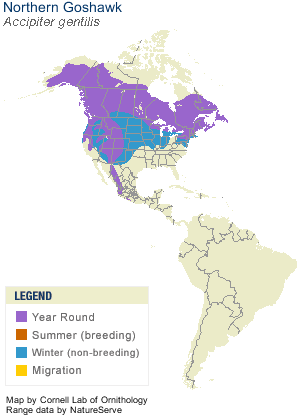
hawks, and the most widely distributed worldwide, the goshawk is
a about the size of a red-tailed hawk. A resident of dense woodlands,
the goshawk's diet is mostly small
mammals, such
as squirrels and rabbits, but they also take pigeons, pheasant and
grouse,
and are a
leading
predator of the crow. Because they prey
less on insect eating birds, they have not declined as much due to
pesticide
poisoning as their smaller cousin, the Cooper’s hawk.
In fact, they have spread south from the
Canadian forests to take over cooper hawk territories in some areas.
Often used by falconers, goshawks will burst
from cover to take prey. They are extremely daring, and will sometimes
take
domestic ducks, geese and chickens right in front of the farmer, which
might
partially explain why hawks in general have such a bad reputation. Accipiters, particulary the Goshawk, will also attack
falcons, so falconers are wary of flying accipiters and falcons
together.
Owls are the only raptors who nest earlier in the year than Goshawks.
Courtship in New York begins in March, and is noisy and gymnastic,
featuring circling, slow flapping of the wings, and gliding in a
dihedral "V" shape with the male closely trailing the female. Goshawks
nest high in hardwood trees, in areas of the forest with open
understories and scant ground vegetation.
The female will do most of the nest building, and the pair will
maintain up to eight alternate nest sites in the general area. Goshawks
will
dive at and drive away people who approach their nest, with the larger
female
leading the attack. The presence of "plucking
logs", upon which goshawks pluck the feathers or fur from their prey
often give away the vicinity of a goshawk's nest, and goshawks will
cache prey during the brooding season, wedging it in branches near the
nest. Goshawks prefer
to nest not far from a permament source of water, preferably with a
sloping beach to enable bathing.
The female lays three to four eggs, and incubates them for up to 38
days, continuing to brood the chicks until they are two weeks old, and
thereafter only in cold, wet weather. Goshawk chicks fledge before they
are 42 days old, and become independent within four to eight weeks,
with male chicks striking out on their own earlier than females.
Being primarily forest predators, goshawks use
concealment and surprise when attacking prey. Goshawks will
perch briefly, look for motion on the forest floor below, and then fly
to another perch, repeating the process. This behavior will combine
with scouting while flying at the edge of the forest or flying low
above dense vegetation. The goshawk is
the only raptor which pursues
its prey on the ground, killing it by the powerful clutching action of
the talons, piercing the vital organs of its prey.
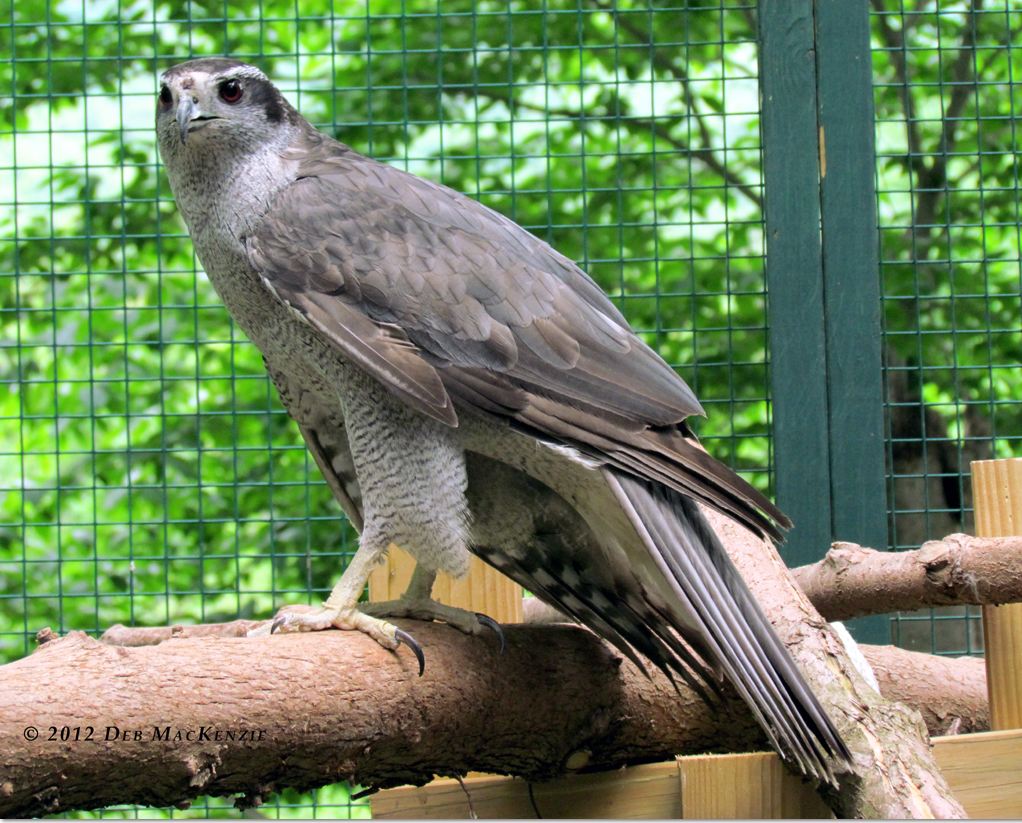
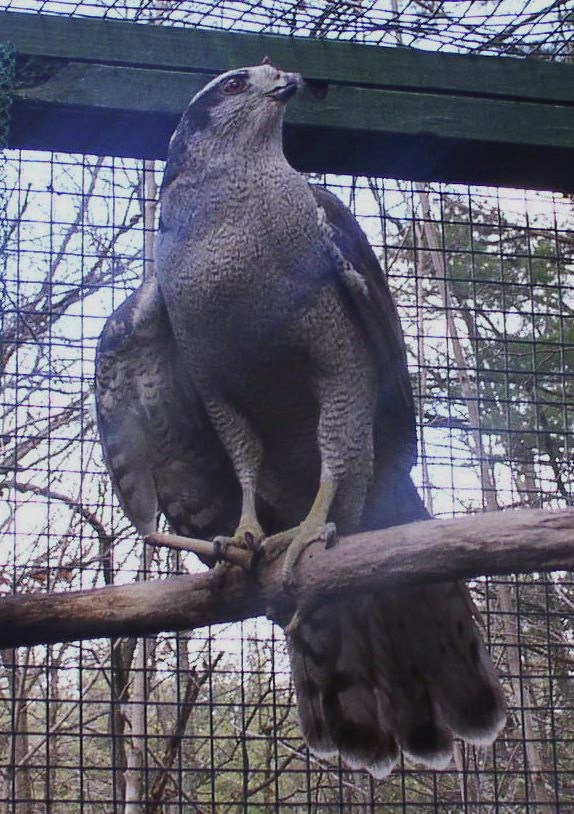
"Athena" collided with a tractor, while
hunting rodents in a farmer's field in Crown Point. Goshawks, and accipiters
generally, tend to be more nervous in captivity, and as
Rehab patients, than are the Buteos, such as
Red-Tailed Hawks, so please speak softly, move
slowly, and give Athena space. Goshawks live up to about twenty years
in the wild.
Gary Berke and Steve Hall
 aptors
Rehab Refuge
aptors
Rehab Refuge