








|
Lynx Order: Carnivora Family: Filidae Genus: Lynx Species: Felis Lynx The
Eurasian Lynx, the Canadian Lynx,
the Bobcat and the Iberian Lynx
are the four species within genus Lynx, and a
great
introduction to how evolution and natural selection work.
All are descended from the
extinct Issoire
Lynx, which originated in Africa during the late Pliocene about three
million
years ago, about four million years after lynx ancestors separated from
the
ancestors of cougars. The
Issiore Lynx, stockier with a longer neck, but shorter limbs than its
descendants, may be the bridge between the Lynx and the larger cats.
The
Iberian Lynx, the most
endangered cat in the world thanks to hunting, trapping and habitat
loss,
appears to be directly descended from the Issiore Lynx. The Eurasian
Lynx
entered North America across the Bering Land Bridge about 2.5 million
years
ago, in two waves, near the dawn of the Pleistocene, setting the stage
for the
bobcat and the Canadian lynx. Changes
on planet Earth, wrought through
plate tectonics, and its consequences, volcanoes
and earthquakes, along with rivers and the gradual filling,
draining or evaporation of large bodies of water, may lead to
separation and
isolation of a group of any individual species. In this case, glaciers
and ice sheets waxed
and waned, alternately blocking and opening Beringia, as well as
migration
paths down to what would become the U.S. border and Canadian province
areas, a
classic example of how one species gets separated by changing land and
sea
features, the two groups then evolving in different directions, until
representatives of one group can no longer mate, thus resulting in two
species.
The southerly group of Eurasian Lynx evolved into the bobcat, which
assumed a form very close to
what they are today by 20,000 years ago, while the more northerly
group, following
the melting of ice sheets and the opening of boreal forests, evolved
into the Canadian Lynx. The
Canadian lynx is smaller than
the Eurasian Lynx, and slightly shorter than the bobcat. What is most
interesting in these developments is that Canadian Lynx not only
evolved into
specialty predators, largely dependent on snowshoe hare, but, as
Christina
Eisenberg pointed out in “Carnivore Way”, if you compare the skeletons
of the
Canadian Lynx and the snowshoe hare, while covering the skulls, at
first
glance, their skeletal structures appear similar, almost like an
arrangement
where one was literally evolved to chase the other. The wonders of
natural
selection and evolution. On the
other hand, it also means
that Canadian lynx populations are almost entirely dependent on the
populations
of snowshoe hare, not exactly a good place to be, in a world where the
addition
of competition from other predators, like bobcats, human hunters and
trappers,
as well as climate change may cause havoc with the availability of
various
wildlife populations. There are rare examples of hybridization between
lynx and
bobcats, so you might quibble and claim that the two are not yet
completely
independent species. You will meet both bobcats and a female Eurasian
Lynx named
Kayla, when you visit the Adirondack Wildlife Refuge. The
bobcat is a uniquely North
American cat, with most concentrated inside U.S borders, while a
thinner range
sweep east from a central tongue stretching into northern British
Columbia,
dipping south to cross the country maybe 75 miles north of the US.
border,
before heading northeast to the Gaspe Peninsula, where the St. Lawrence
meets
the Atlantic. It is more of a generalist as a predator, as is the
Eurasian
lynx. When climate change leads to a narrower calendar range of
regional
snowfall,
and less depth accumulation overall, lynx move further north and to
higher
elevations, while the bobcat moves in, a trend observed in both British
Columbia and Ontario. As
with most mammals, male lynx are larger than
females, an example of sexual dimorphism. Following Bergman’s Rule,
lynx in
colder northerly climates are larger on average than their more
southerly
counterparts, as larger animals retain body heat better than smaller
ones, and
therefore are more likely to live to breed, and pass along that larger
size. Eurasian
lynx evolved to pursue
larger prey, everything from caribou to roe deer to smaller mammals,
and average
40 to 66 pounds, 28 inches tall at the shoulder and between 34 and 51
inches from
nose to tail. Larger animals like caribou are killed by crushing the
esophagus with
the jaws and holding on until asphyxiation kills the prey. Canadian
lynx are significantly smaller, ranging from
18 to 31 pounds, 19 to 22 inches tall at the shoulder and 36 inches in
length,
while the stockier bobcat is 16 to 31 pounds, 20 to 24 inches tall at
the
shoulder, and 28 to 39 inches long. Why such a disparity between the
Eurasian
Lynx and its descendants? Predators tend to evolve to a size most advantageous to their ability to make a living, and it stands to reason that Canadian lynx found their perfect prey in the snowshoe hare. Survivors get to breed, so surviving, breeding Canadian lynx, facing deer larger than the roe deer the Eurasian lynx get to pursue, came down closer in size to its main prey, the snowshoe hare, and thanks to exaggerated snowshoe-like paw width, developing much better mobility in the snow through which they pursue their most common prey. While
bobcats generally prey on smaller mammals and rodents, leaner prey
periods may cause them to
take
greater risks, and go after larger, more challenging prey like fawns,
fox, female
fishers, swans, domestic cat and small dogs. Studies in Maine indicate
that male fishers
have
more success killing lynx than the bobcat, who often turns the tables
on the
aggressive fisher. Bobcats are the main predator of the whooping crane. Canadian
lynx live in habitats that are further north
and endure longer periods of deeper snow than do bobcats. In fact, not
only do
bobcats have narrower paws than lynx, who carry the added advantage of
fur
between the footpads to add in warmth and stability on ice and snow,
but lynx
in the far northern part of their range, also have wider paws than lynx
living
closer to the U.S. border. Natural
selection tends to happen
slowly over thousands and millions of years, while the spread of
humans, with
our heavy impact on habitat, happened relatively overnight. In
addition,
snowshoe hare numbers wax and wane in ten year cycles, ranging from an
incredible six thousand per square mile to about thirty psm, so while
bobcats naturally pursue snowshoe hares, their more generalist hunting
behavior means
their survival is not so tied to the one species of prey. Lynx are
basically
nocturnal hunters, and typically move five to six miles per night, as
well as
being great swimmers and climbers, using trees for escape, not pursuing
prey. Lynx
grow seasonal coats, with Summer coats tawnier
and browner, while thicker winter coats are grayer with spots fading
and less
well defined. All species of lynx feature two inch hair tufts extending
from
the top of the ears, which helps in directing sound to the ears and
feeling
where stems and brush occur, aiding in the direction of travel or
locating places to wait out bad weather. Fur growing out
the lower cheek area forms a long ruff in winter, resembling a Fu
Manchu beard,
which helps in staying warm, also detecting brush and branches. Lynx
have four
nipples. While
the slightly longer bobcat tail has a white tip, the two
to six inch lynx tail has a black tip. Lynx have twenty eight teeth,
including
four carnassials to aid in tearing flesh and muscle tissue. The jaw is
missing
the upper premolars to allow deep penetration by the incisors, and
tearing by
the carnassials, which is why it often looks as though they’re chewing
with the
side of their jaws. The flexible distance between the metatarsals allow
the toes
to spread moving through snow and let the paws stretch to four inches
wide. As
with male cougars, Canadian lynx males have large
territories, which are affected by topography, availability of prey,
the number
of other male lynxes, among other factors. Male territories average
fifty to
ninety miles, overlapping several female territories, which average
twenty to
forty square miles. Canadian
lynx mate between March and May, the farther
north the female, the later she’ll go into estrus for only three to
five days.
Females will mate with only one male, while males mate with multiple
females.
Gestation period is sixty days, and one to four kittens will be born,
in a prelined
den in heavy brush or under ledges or logs. Kittens are born blind for
the
first two weeks, and average less than half a pound at birth. They
start leaving
the den at five weeks, and begin hunting on their own at about eight
months. By
ten months, they’ll be on their own, and fully grown by two years.
Males take
no part in raising kittens. Steve Hall |
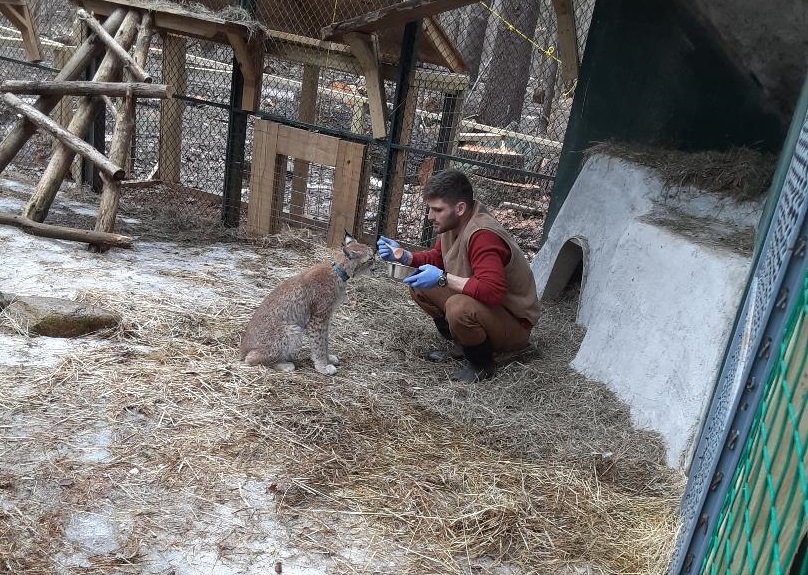
Kayla, a year old female Eurasian Lynx, fed by Alex at the Adirondack Wildlife Refuge


Kayla, a year old female Eurasian Lynx, at the Adirondack Wildlife Refuge, by Steve Hall
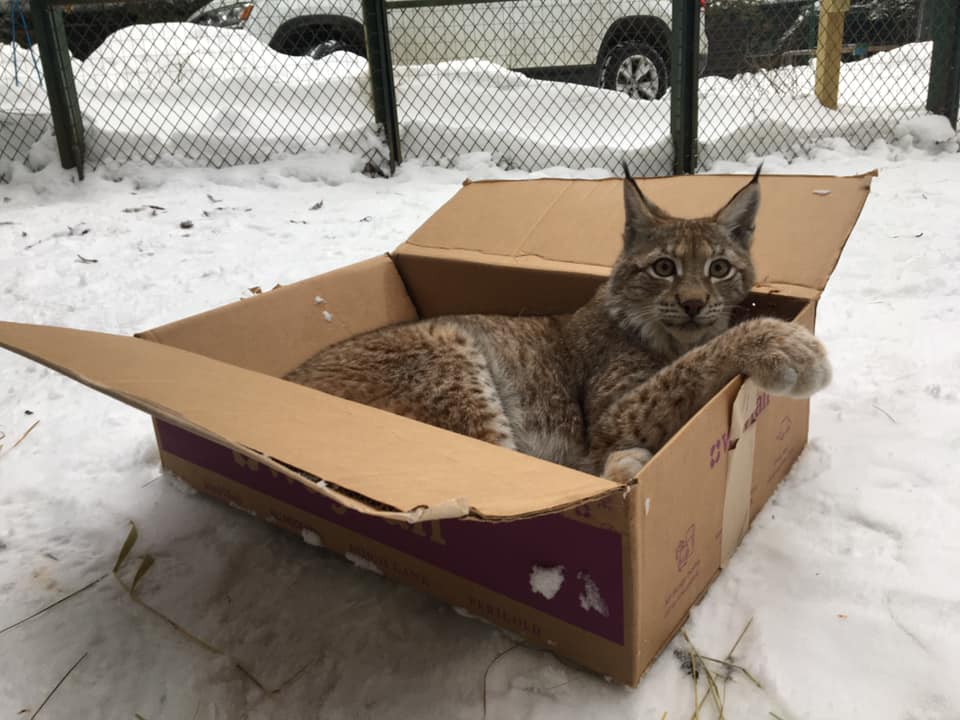
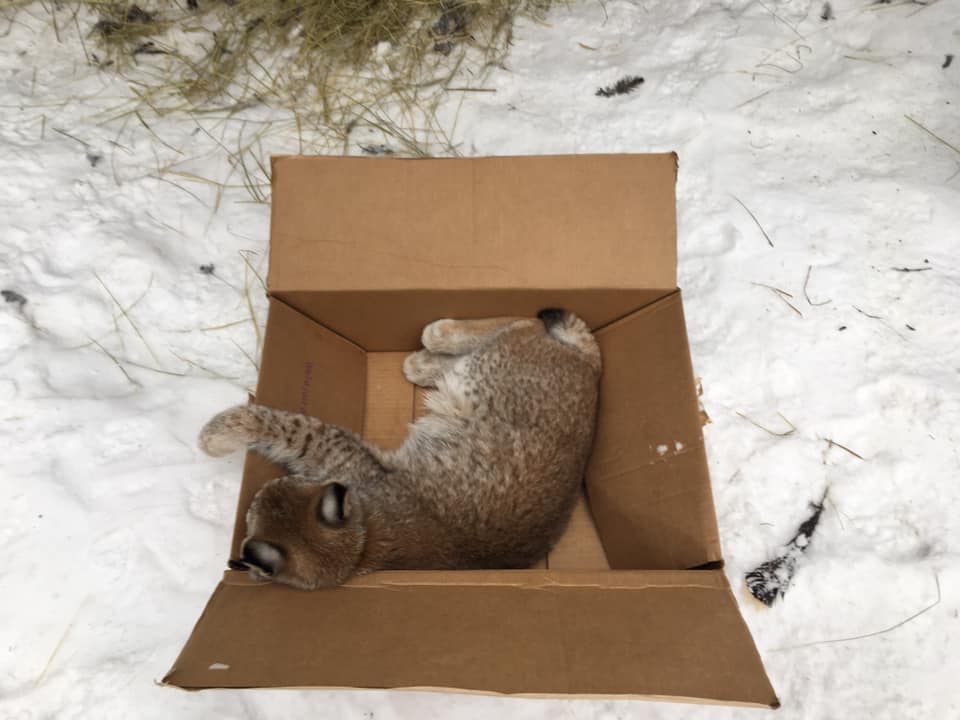
Kayla, a Eurasian Lynx, playing at the Adirondack Wildlife Refuge
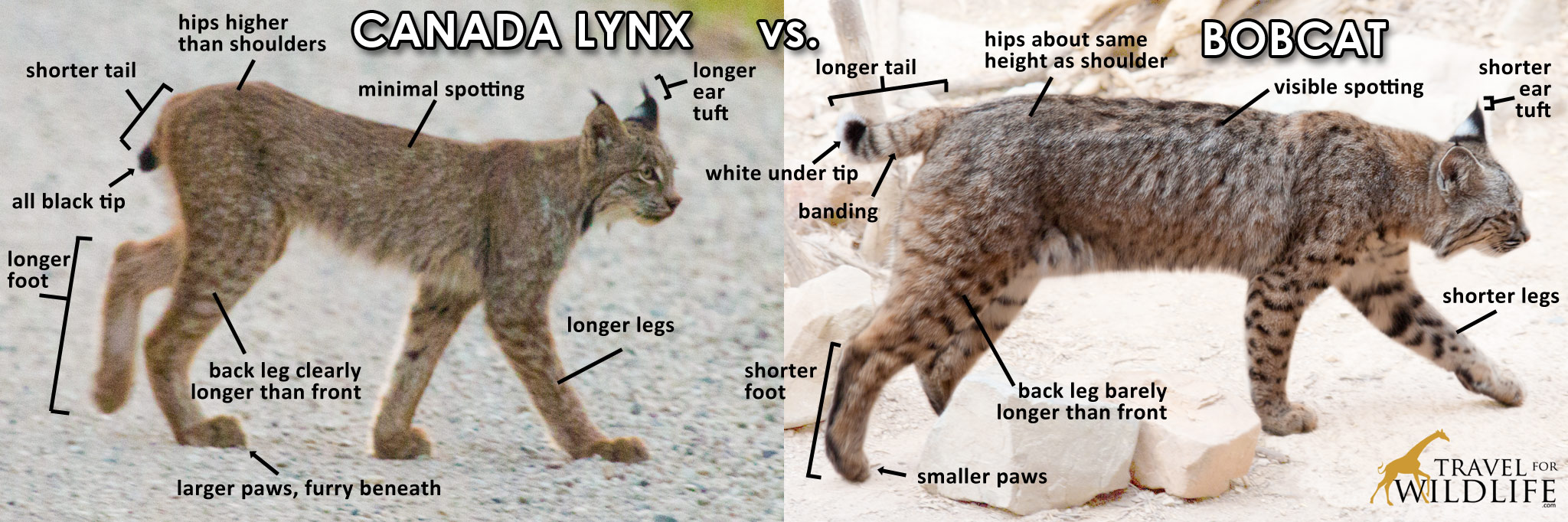
http://travel4wildlife.com/wp-content/uploads/2014/01/lyx-vs-bobcat2.jpg
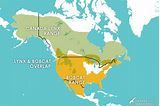
Lynx and Bobcat Range by Wiki

| Home |
Release of
Rehabbed Animals |
Learn
About Adirondack & Ambassador Wildlife |
Critter
Cams & Favorite Videos |
History
of Cree & the Adirondack Wildlife Refuge |