"Turning and turning in the widening gyre The falcon cannot hear the falconer;
Things fall apart; the centre cannot hold; Mere anarchy is loosed upon the world,
The blood-dimmed tide is loosed, and everywhere The ceremony of innocence is drowned;
The best lack all conviction, while the worst Are full of passionate intensity."
William Butler Yeats, The Second Coming








Jezebel, female, by Deb McKenzie. Click on photos to enlarge.
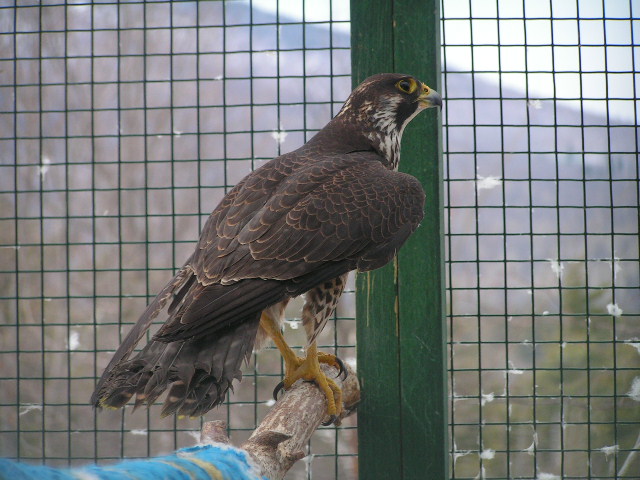
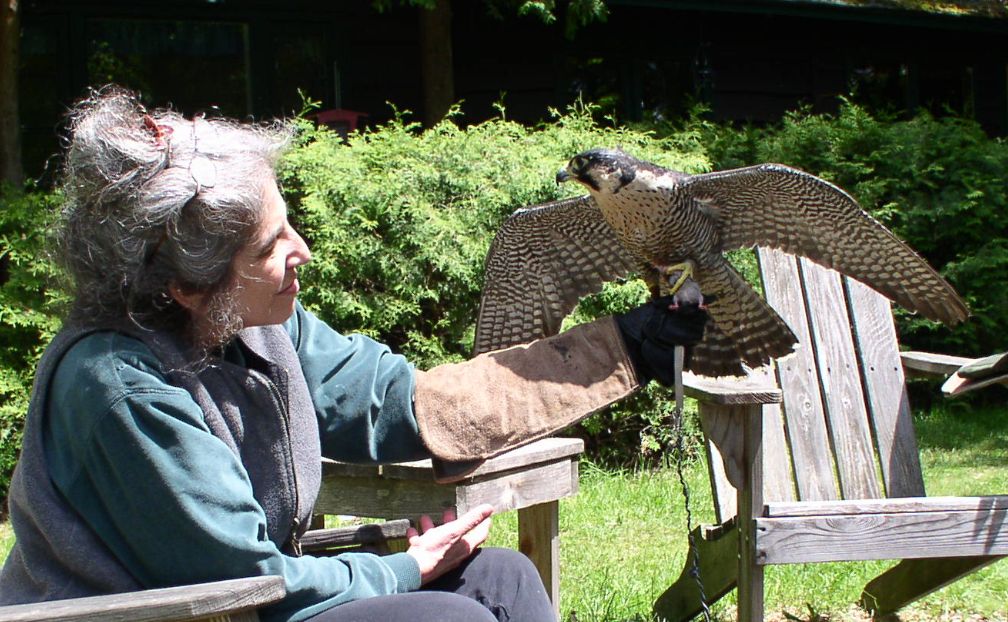
Angel, a male, left, and Jezebel, a female, with Wendy
Photos by Steve Corvelli & Steve Hall
|
Falco peregrinus Order: Falconiformes Family: Falconidae Genus: Falco
One of the most
unforgettable natural phenomena is the sight of the peregrine falcon
diving
down through its aerial "stoop", like a fighter jet, striking its
oblivious winged prey at 200 miles per hour and knocking it cold with a
blow
of its
balled-up talons. They then follow the
prey to the ground and kill it by severing the vertebrae in the neck,
with a
special notch in their peaks, called the tomial tooth, a feature which
helps distinguish falcons
from
hawks and eagles. They also kill their
prey by grasping it in their talons as other raptors do.
Due to air pressure, diving at such high speeds complicates the simple act of drawing air for breathing. Fighter jet engines feature air inlet cones, which enable the engine's intake of air at supersonic speeds, by breaking up and slowing the air intake, to subsonic speeds. This appears to mimic the nares, in effect, nostrils, in a peregrine's cere, which contain bony tubercles, conical valves which slow down the air rushing over the diving peregrine's nares, allowing the peregrine to breathe at speeds where the air pressure would otherwise prevent their doing so. A peregrine falcon is most readily identified by its "malar stripe", the dark band or mask extending from its crown down across the eye. the Peregrine resembles an arrow both in the air and perched. Their favorite food are pigeons, jays, black birds and water birds. Most insect eating birds are now in decline from newer pesticides, so the peregrine faces another threat. Do you think that the fact that the red knot, a chunky sandpiper, has been clocked at 110 MPH in straight flight has any thing to do with the hunting habits of the peregrine falcon?
The peregrine lives on rocky cliffs, generally
unapproachable from the ground, and
facing southeast, south or southwest, to catch the early morning sun. Through binoculars, look for evidence of
whitewash from the falcon's excrement and blowflies feeding on
decomposing prey fragments.
Peregrines are the favored bird of falconers,
and have been used in hunting for thousands of years. Falconers played
a key
role in the Peregrine’s recovery after their decline during the DDT
years. Peregrines don't build nests, but scrape a small depression on a cliffside, preferably near water. Ironically, the peregrines’s nesting preference made it very comfortable nesting on New York City skyscrapers, a fact which contributed greatly to its restoration, and put a welcome check on the ever-burgeoning pigeon population. The female peregrine lays 3 to 4 eggs, which she incubates for about 34 days. The hatchlings fledge after 5 or 6 weeks. The male falcon, often referred to as the "tiercel", will do most of the hunting for food early on. As the chicks grow, and their food requirements increase, the female joins the male in hunting, and returning food to the nest.
Peregrines migrate to South America in Winter,
moving up to 15,000 miles in a year, with Assateague National Seashore,
off Maryland and Virginia, being a concentration point for migrating
falcons and falcon watchers. This great migration is why Angel, who
injured a
wing
while pursuing a pigeon in Los Angeles, has a thermostatic heat lamp to
bask
under, during the cold Adirondack Winters. When it's zero outside on a
cold Winter night, it's 80 degrees under the heat lamp, so pass Angel a
pina colada! Angel was injured while
diving on a pigeon in Los Angeles. Jezebel is an older female donated
by a
falconer in Oregon.
Gary Berke and Steve Hall
|
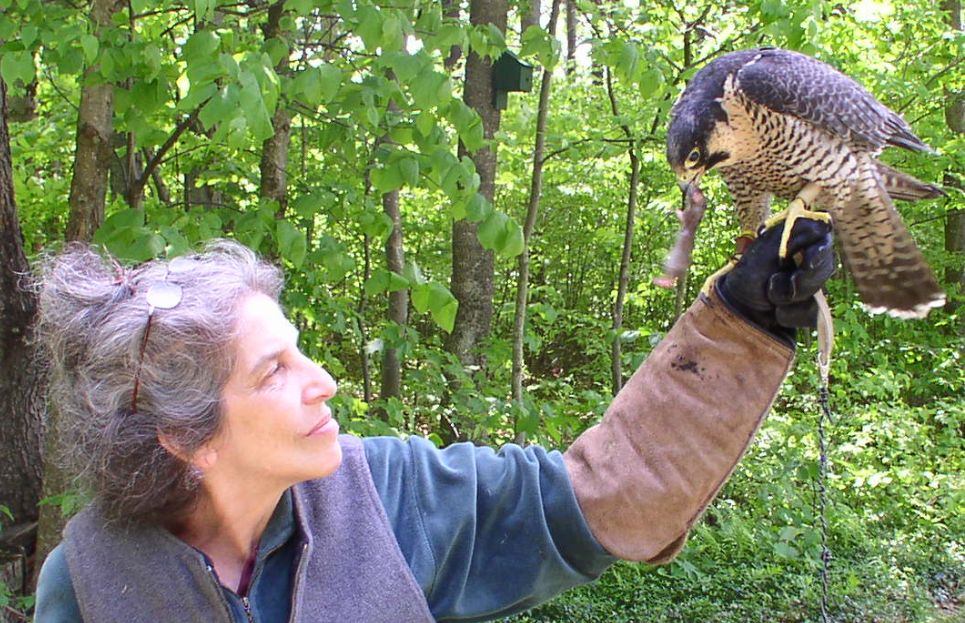
Jezebel with Wendy, by Steve
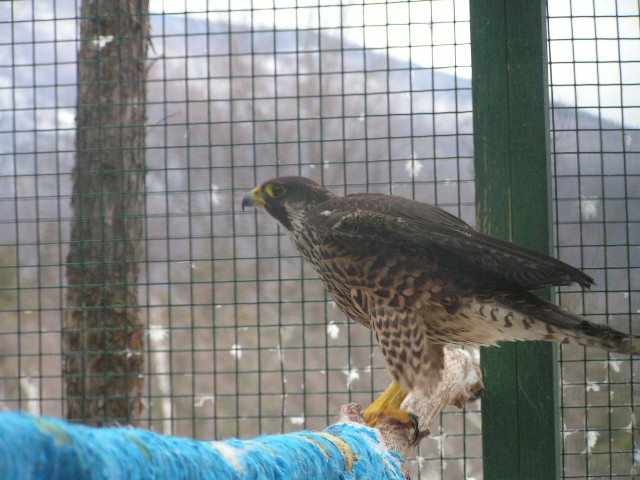
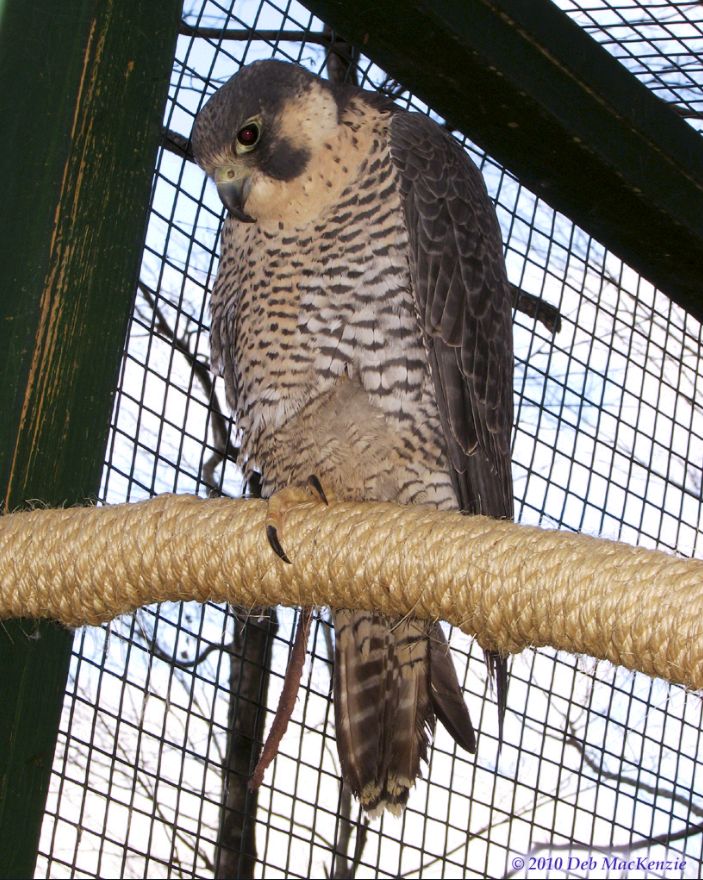
Angel - Jezebel
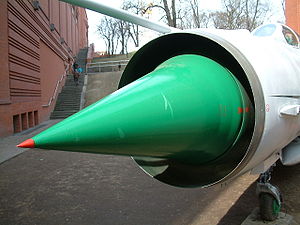
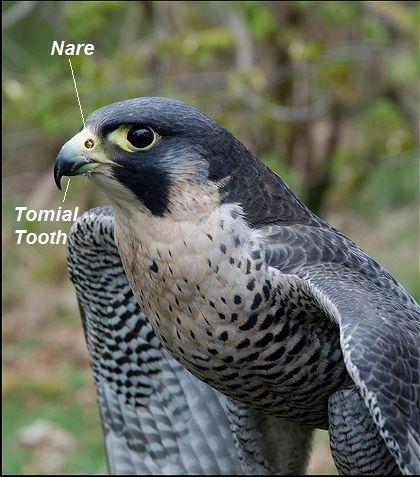
Mimicry & the real deal: Jet engine's air intake cone, and a peregrine's tuberled nare.
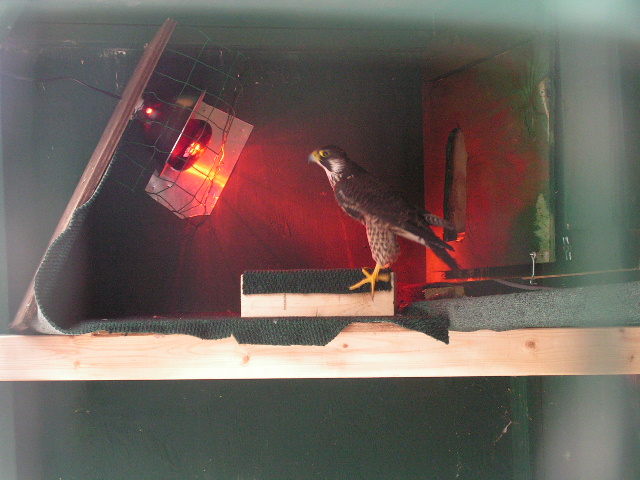
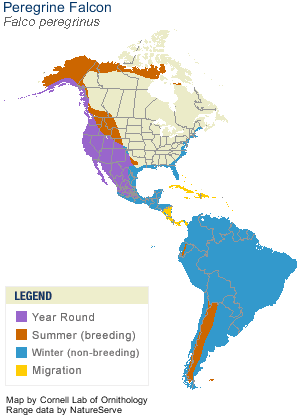
photo by Steve Corvelli
Rock and Hawk By Robinson JeffersHere
is a symbol in which
Many
high tragic thoughts
Watch
their own eyes.
This
gray rock, standing tall
On
the headland, where the sea-wind
Lets
no tree grow,
Earthquake-proved,
and signatured
By
ages of storms: on its peak
A
falcon has perched.
I
think, here is your emblem
To
hang in the future sky;
Not
the cross, not the hive,
But
this; bright power, dark peace;
Fierce
consciousness joined with final
Disinterestedness;
Life
with calm death; the falcon’s
Realist
eyes and act
Married
to the massive
Mysticism
of stone,
Which
failure cannot cast down
Nor
success make proud.
|

| Home |
Release of
Rehabbed Animals |
Learn
About Adirondack & Ambassador Wildlife |
Critter
Cams & Favorite Videos |
History
of Cree & the Adirondack Wildlife Refuge |