








 Lynx Rufus Order: Carnivora Family: Felidae Genus: Lynx The Eurasian
Lynx entered North America across the Bering Land Bridge about 2.5
million
years ago, in the first of two waves. Glaciers waxed and waned,
alternately
blocking and opening Beringia, as well as migration paths down to what
would
become the U.S. border and Canadian province areas, a classic example
of how
one species gets separated by changing land and sea features, the two
groups
then evolving in different directions, until representatives of one
group can
no longer mate, thus resulting in two species. The second wave, coming
with melting
of northern glaciers evolved into the Canadian Lynx. The Canadian
lynx is smaller than the Eurasian Lynx, but slightly taller than the
bobcat.
What is most interesting in these developments is that Canadian Lynx
not only
evolved into specialty predators, largely dependent on snowshoe hare,
but if
you leave out the skulls of the lynx and hare, at first glance, their
skeletal
structures appear similar, almost like a marriage where one was
literally evolved
to chase the other. The wonders of natural selection and evolution. On the other
hand, it also means that Canadian lynx populations are almost entirely
dependent
on the populations of snowshoe hare, not exactly a good place to be, in
a world
where the addition of competition from other predators, like bobcats,
human
hunters and trappers, as well as climate change may cause havoc with
the
availability of various wildlife populations. There are examples of
hybridization between lynx and bobcats, and you will meet both bobcats
and a
Eurasian Lynx when you visit the Adirondack Wildlife Refuge. The bobcat is
a uniquely North American cat, with most concentrated inside U.S
borders. It is
more of a generalist as a predator, as is the Eurasian lynx. When
climate
change leads to a narrower date range of regional snowfall, and less
depth accumulation
overall, lynx move further north and to higher elevations, a trend
observed in British
Columbia and Ontario. A declining
snowshoe hare population results in fewer Canadian lynx, while the
bobcat, hunting
smaller animals like mice, squirrels, rabbits, possums, and birds, in
shallower
snow, moves in. Concentrating on smaller prey causes a gradual
adjustment
downward in bobcat size, which may explain why the bobcat is shorter
than the
Eurasian lynx, and why, by 20,000 years ago, bobcats had assumed their
current size
and appearance. About twice
the size of domestic cats, adult male bobcats range from 14 to 40 lbs,
females
from 8 to 32 lbs. From nose to bobbed tail, bobcats are 19 to 50
inches, and
stand 12 to 24 inches at the shoulder. Following Bergman’s Rule,
bobcats in
colder northerly climates are larger on average than their more
southerly
counterparts, as larger animals retain body heat better than smaller
ones, and
therefore are more likely to live to breed, and pass along that larger
size.
Lynx are slightly taller, but not always heavier, and have specialty
features
like fur covering the pads of their broader, snowshoe like paws to help
in heat
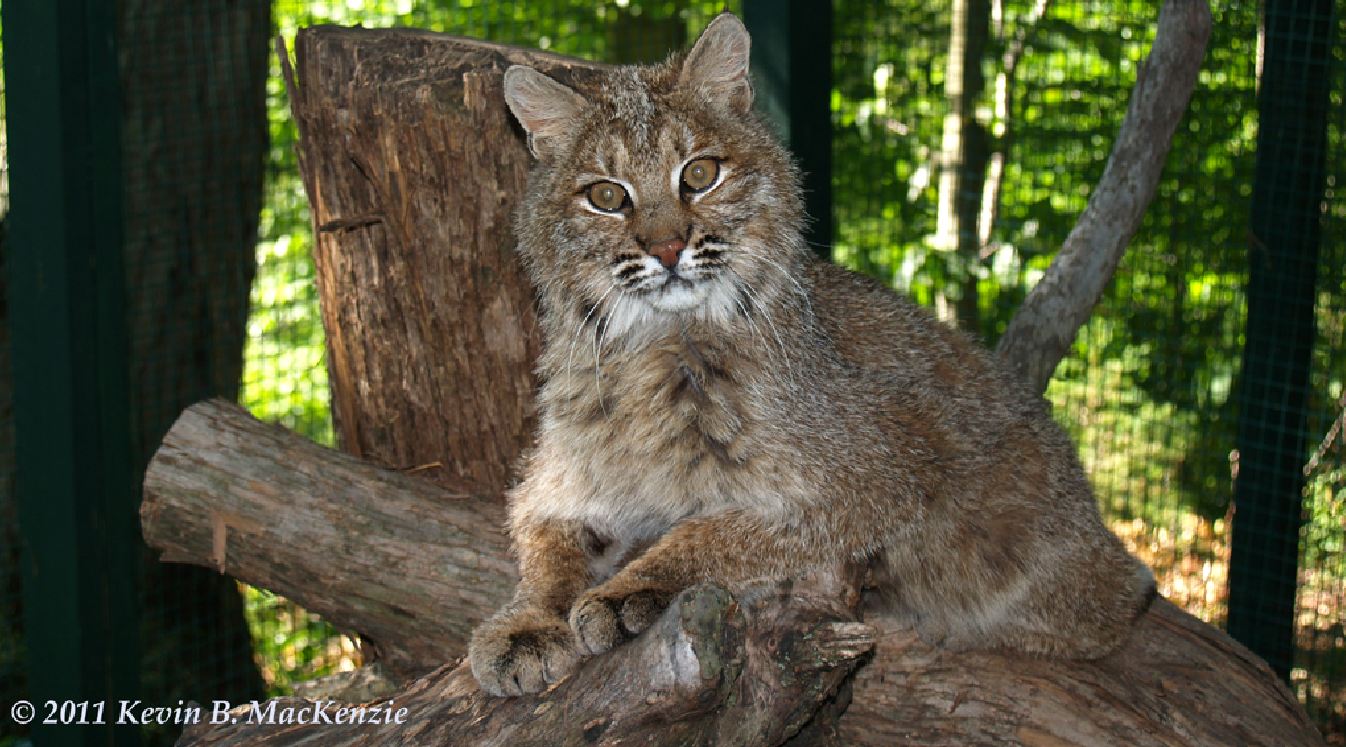
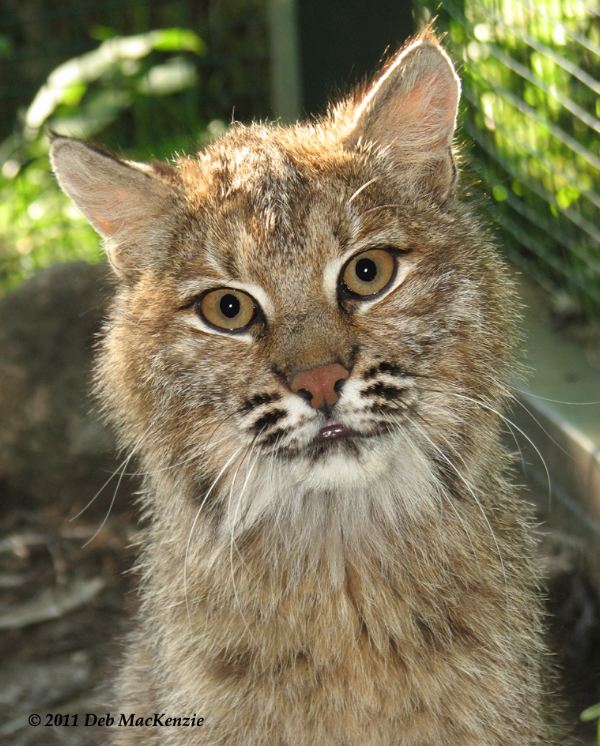
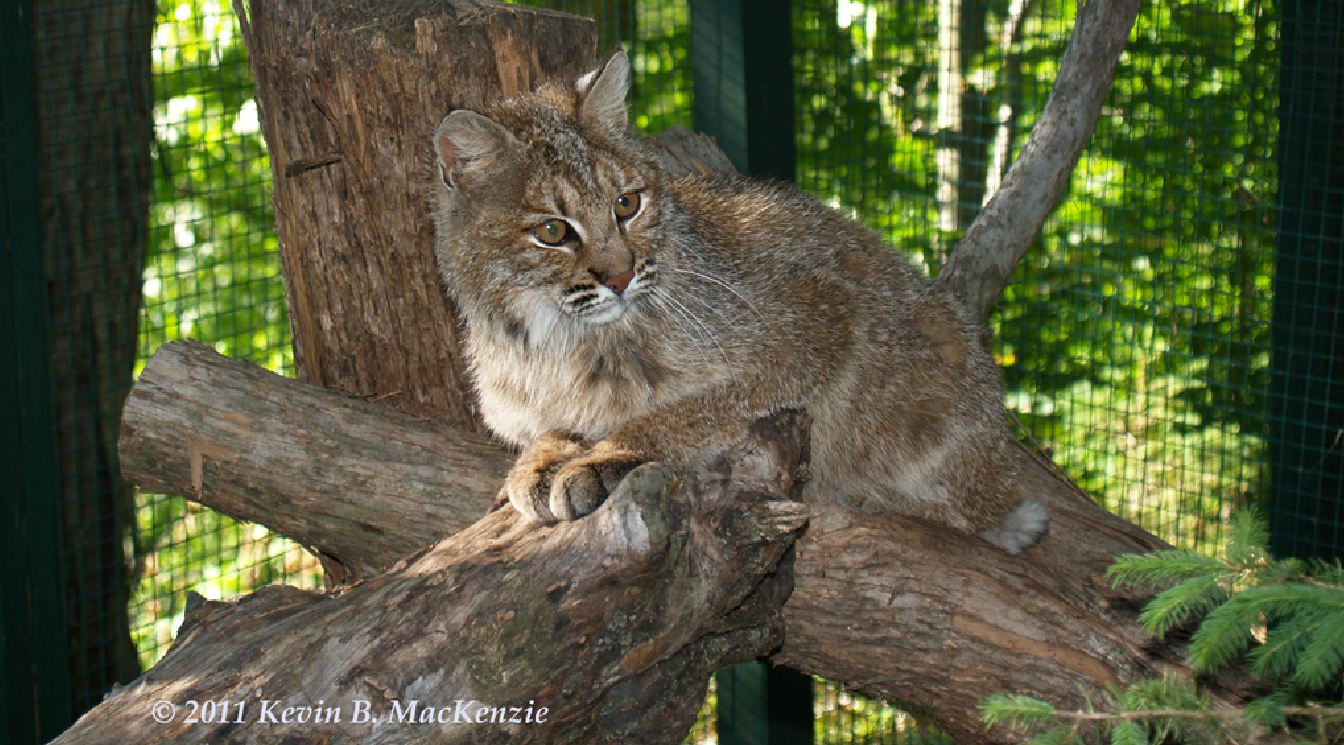
retention. Bobcats
have prominent white spots bordered by
black on the back of their ears and on the underside of their six inch
bobbed
tail, making it easier for kittens to follow mom. Their ears are not as
tufted
as lynx ears, which in both cases may aid in directing sound to the
ears, and
in conjunction with ruff whiskers, make it easier to detect brush and
other landscape
features they are moving through. Their broad paws serve as snowshoes,
while
the webbed toes aid in swimming, and have retractable claws. The four
toed foot
prints are easily identified, as they’ll be larger than cat prints, but
lack
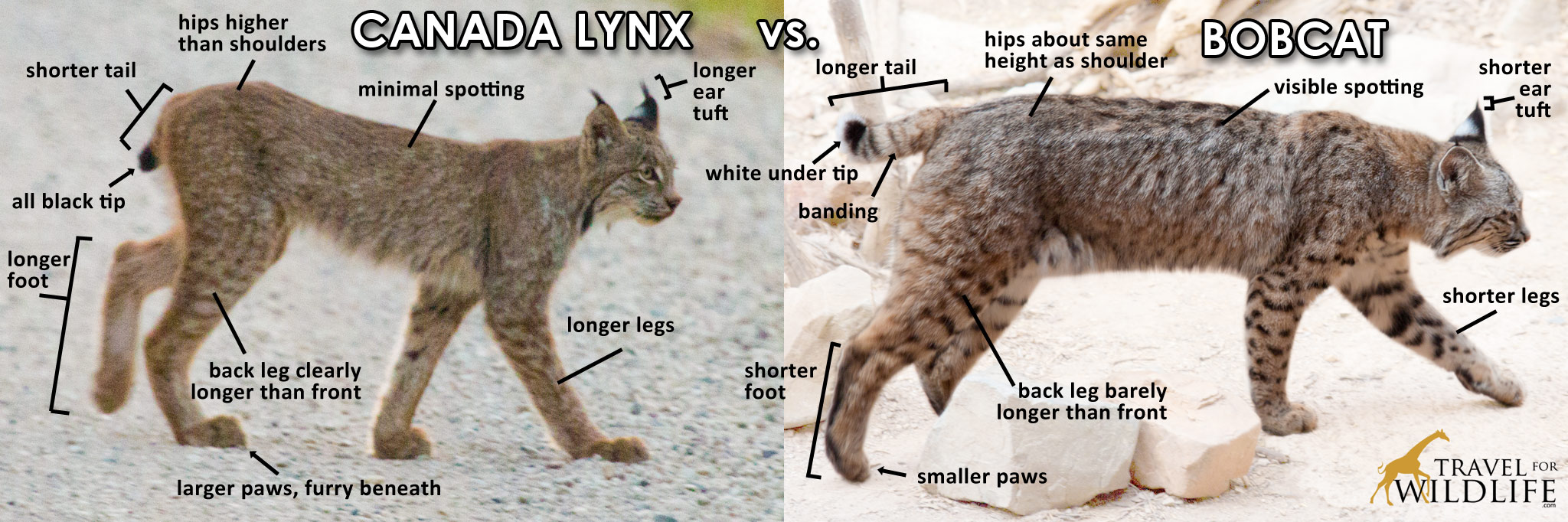
the claw marks of canids. Lynx have
longer legs, longer rear feet than bobcat, and their hips are
consequently higher
than their shoulders. Lynx have stubbier, black tipped tails, much
broader
paws, and with both species, the front paw is broader than the rear. Camouflage
is naturally an important aspect of appearance. Bobcat coats are
brownish,
tawny, beige, with darker colors indicating bobcats which live in
darker
habitat like forest and heavy understory, as opposed to the lighter
colors of
desert and plains habitat. Their underside is whitish. Horizontal
blotches
shaded by the gradually lightening coat grow more distinct down the
flanks and
legs morphing into darker, more defined spots. Lynx have grayer coats
with less
defined spotting. Bobcats live
in a wide variety of habitats, which must contain not only prey, but
access to
females, as well as spread out temporary shelters, under rocks, in log
hollows,
caves or brush piles. when returning to the den from a great distance
is not
practical. Bobcat territory sizes vary by region, and may expand with
seasons
in which prey is not as abundant, as when some Summer prey is
hibernating. All
else being equal, which it never is, male territories average about 8
square
miles, and may overlap female territories. Bobcats scent mark their
territories
assiduously, spraying, scraping, clawing trees and rubbing with anal
glands. Bobcats
probably move an average of 4 miles per day, and are predominantly crepuscular
in their
hunting behavior. While
bobcats generally prey on smaller animals, lean times may cause them to
take
greater risks, and go after larger, more challenging prey like fawns,
fox, female
fishers, swans, domestic cat, small dogs. Curiously enough male fishers
have
more success killing lynx than the bobcat, who often turns the tables
on the
aggressive fisher. Bobcats are the main predator of the whooping crane.
Bobcats are
basically ambush and pounce predators, sneaking up on prey, or waiting
for prey
to pass by. The most important sensory input is their sharp eyesight,
probably
followed by what they hear, and finally what they can smell. Bobcats
are great
climbers, but reluctant though competent swimmers. Bobcats have a wide
range of
vocalizations, including scowling, snarling, spitting and screaming
during
mating season. Prey which is not entirely eaten will be cached, and
visited
again and again. Mating takes
place between February and March, with a litter of one to four kittens
born in
a vegetation lined den about 60 days later. Mom nurses the kittens for
about
two months, and they stay with her, learning how to hunt, sometimes
through the
first winter. Male bobcats play no role in rearing the kittens. Female
kittens
can mate at one, but usually wait until they are two. Males can mate at
two.
Bobcats live an average of 10 to 12 years in the wild, sometimes twice
that in
captivity. Steve Hall
|
Click to enlarge photos



The MacKenzie's photgraphy website is at http://www.mackenziefamily.com/creativenature/

http://travel4wildlife.com/wp-content/uploads/2014/01/lyx-vs-bobcat2.jpg


Bobcat Range from National Geographic Canada Lynx Range from coniferousforest.com
click on map for link

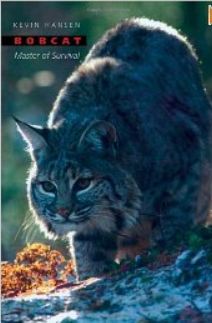
Bobcat: Master of Survival, by Kevin Hansen
Come meet our Ambassador Bears & Learn all about Bears
| Home |
Release of
Rehabbed Animals |
Learn
About Adirondack & Ambassador Wildlife |
Critter
Cams & Favorite Videos |
History
of Cree & the Adirondack Wildlife Refuge |