| Public Land Use, Ranching, Politics & What We Eat |

| “Wilderness is not a luxury but a necessity of the human spirit, and as vital to our lives as water and good bread. A civilization which destroys what little remains of the wild, the spare, the original, is cutting itself off from its origins and betraying the principle of civilization itself.” ― Edward Abbey, Desert Solitaire |
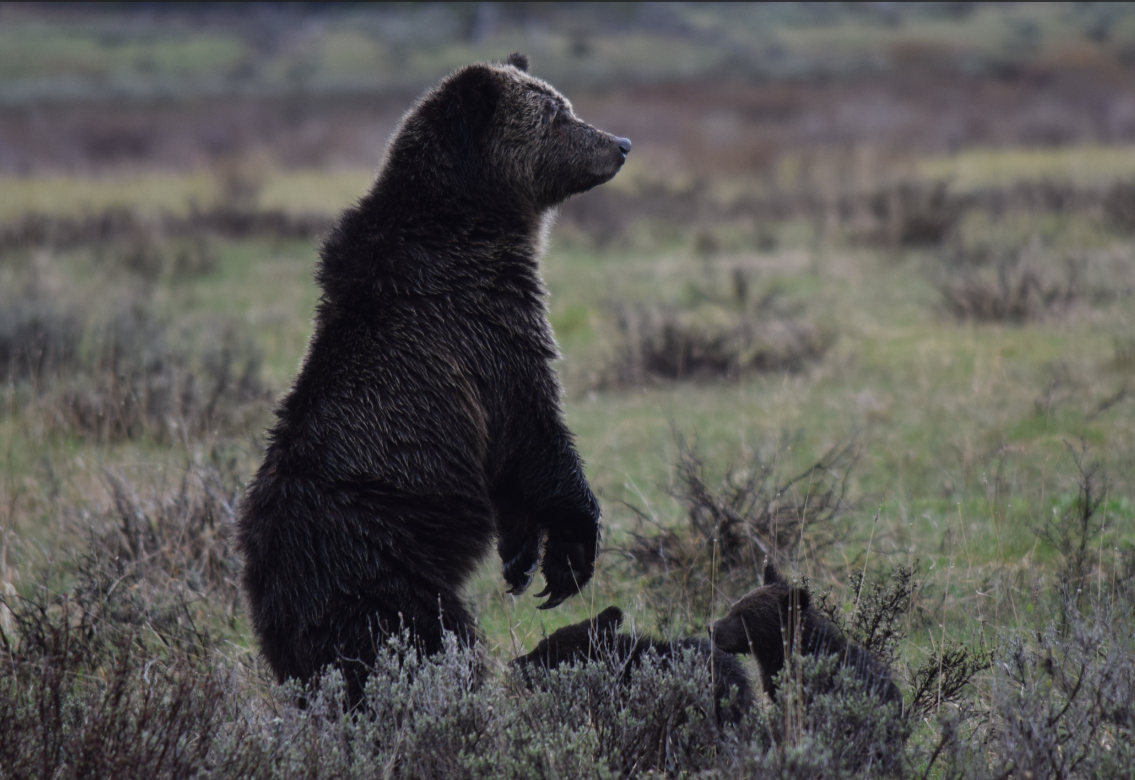
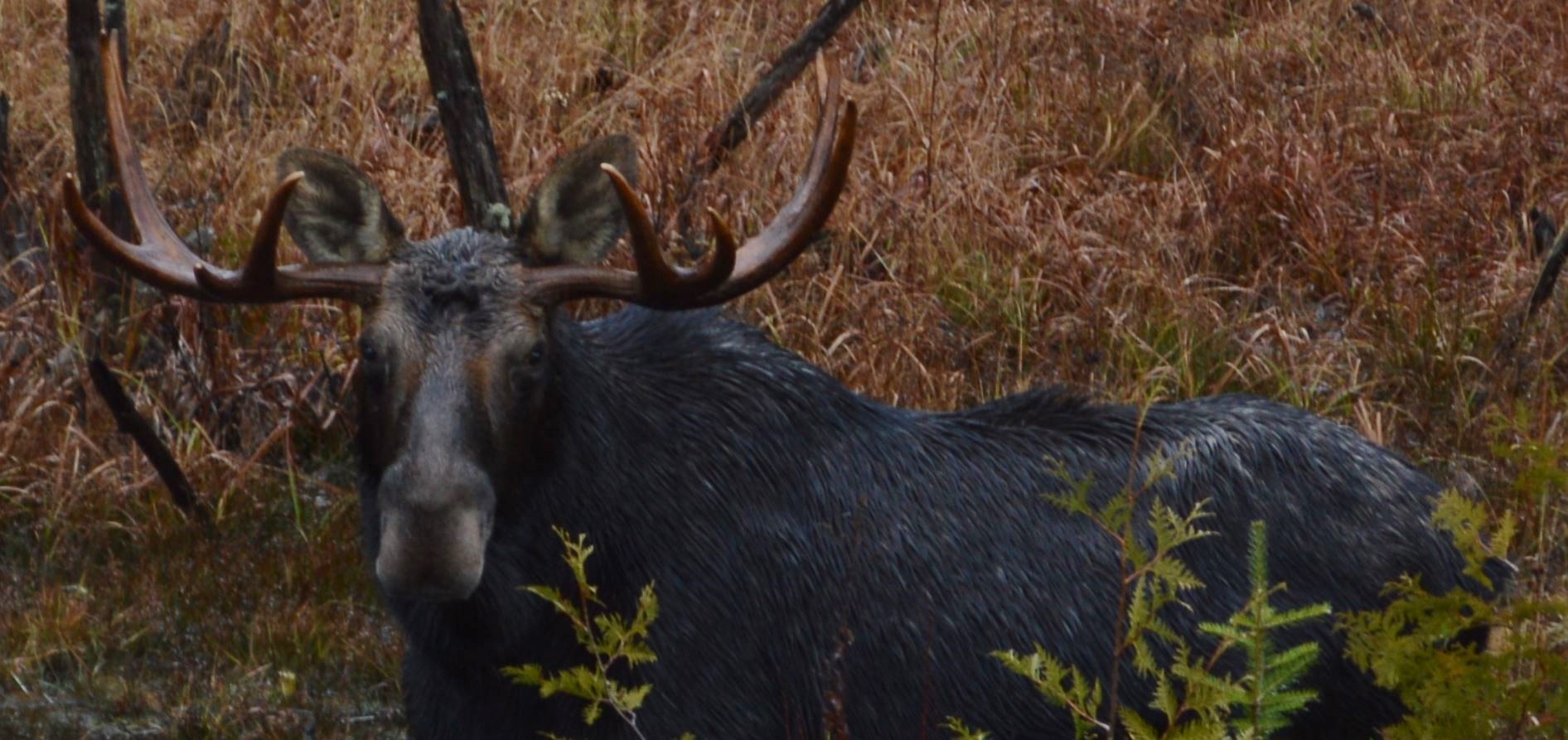

Yellowstone grizzly mama with cubs, Algonquin Provincial Park bull moose, and Denali Grizzly, by Steve Hall






|
by Steve Hall, Adirondack Wildlife Refuge Ranching in Arid Western States Western
ranchers represent a small fraction of the people living in western
states, and
the ranchers who graze their livestock on public lands are themselves a
minority among
ranchers, but they wield a virtual stranglehold on the 300 million
acres of federal
lands, ranging from BLM lands, to US Forest Service lands, and US Fish
and
Wildlife Lands. These politically connected ranchers graze livestock on
ninety
percent of these lands, paying the government (through a cost per
“animal
unit”) less than
fifteen percent of the fair market price they’d pay if they
leased privately owned lands. The
damage
caused by trampled vegetation, soil erosion, and its consequent stream
destruction and water pollution, has a devastating impact on the land,
not to
mention the removal or exclusion of native animals, such as wild
horses, bison,
elk, deer, bear, prairie dogs, coyotes, wolves, cougars, etc. Most
people are
not aware of the fact that it is much more efficient to raise cattle
east of
the Mississippi, which averages much more rain, such that a rancher in
Nevada,
for example, needs 230 acres annually to support one cow, while those
in New
York, Vermont, Mississippi and Missouri need only one acre. Then
there
is the matter of government subsidies beyond the below market rates the
taxpayer realizes when the land is rented for grazing. Why, at a time
when we
are being told that the government is broke, does Wildlife Services, a
seemingly unaccountable unit of the USDA, spend millions of taxpayer
dollars
every year to kill predators on federal land, which specifically
benefits
ranchers, who appear to be unfamiliar with the phrase, "the cost of
doing
business"? To make matters worse, methods of killing are not restricted
to
shooting predators on the ground, or by the staggeringly expensive
shooting from aircraft,
but extend to traps and poisons, which may target predators, but
invariably
kill pets and other non-target animals, including some of the livestock
who
accidentally trigger such devices, as well as those predators involved
in
natural rodent control, such as birds of prey. Why
do
"open range laws" in many Western states allow ranchers to let their
cattle roam free, and why is it up to the average citizen to fence in
their
property to prevent destruction by free ranging cattle? If your vehicle
strikes
a cow which has wandered onto a highway in an open range state like
Idaho, you
are responsible for both the damage to the cow and to your vehicle. Small
ranchers tend to be conscientious citizens, following good neighbor
policies,
and are guilty of nothing more than trying to make a living by
continuing a
family tradition in a business where profitability, as in many other
modern
business models, is increasingly tied to consolidation, growth and cost
cutting. In fact, the reality is that most small farms and ranches in
today’s
economy are run by folks with supplementary job incomes, who struggle
to make
ends meet. Most
of the
taxpayer borne subsidies noted above, accrue to the largest western
ranch
operators. Of the 18,000 BLM permittees, for example, the top 500
control
nearly 50% of the land allocated for grazing. About 30% of all
livestock graze
mainly part time on these federal lands, while 70% graze exclusively on
private
lands. These
largest and most politically connected ranchers are often among the
most
conservative political voters in the country, and the first to brand
other
folks as "socialists". Right leaning media has done an effective job
of frightening many of their followers, by blurring the distinction not
only between
communism and socialism, for folks who wouldn’t know Karl Marx from
Groucho
Marx, but more importantly, between socialism and a social democracy,
which latter
best describes the United States, where almost all social services from
police
to public schools, and from the interstate highway system to our armed
forces,
are examples of socialism at work. They may say that they do not want
“socialism”, but the
last thing these big ranchers want is actual "capitalism". The Bundy Bunch & The Land Grabbers But
this isn't what the Bundys want. When they pose as "The People", what
they want is to exclude other peoples, particularly other races,
nationalities, and those of different political persuasions, and they
want the lands turned over to their ranching businesses, for free,
without any oversight. When they wave the flag, which many of us
actually fought for, and therefore find really offensive, they are
simply using the oldest distraction in the book, patriotism
as a symbol of self interest, and an emotive way of disguising their
true intent. Legally,
Cliven
Bundy and his sons are thieves, who stole from the American taxpayer,
and were
supported by right leaning media sources, along with several current
presidential candidates, until the senior Bundy began offering
embarrassing and
unsolicited observations on blacks and other minorities, at one point
suggesting that blacks were "better off under slavery". As an amusing
example of
situational outrage, it is now coming out that the Bundys have availed
themselves of a number of government programs, from small business
loans to the
grazing permits for which they refuse to pay. Bundy’s
reasoning on the federal land question seems to be that he should be
allowed to
graze his livestock on public lands without cost to him, because his
family had
done so without paying for decades. The fact that the taxpayer
subsidizes
eighty five percent of the cost of allowing ranchers who do pay grazing fees,
to use the federal lands, is somehow not a factor in Bundy’s reasoning,
even if
it is extremely aggravating to those of us who run successful
businesses
without any federal or state subsidies. The Livestock Interests and Congress The
final
irony is that your congressmen and senators, ever mindful of which
political
contributions ensure their reelection, do not want you to know where
your meat
comes from, or which cocktails of antibiotics and hormones your
livestock
ingested before the resulting junkie steer winds up on your
dinner plate. Livestock in
America consume four times as many antibiotics as people do, which,
along with
hormones, allow unnatural growth rates, such that the steer you eat
today came
to market in only about 14 months, while the steak your parents ate
took 4 years to
get to the table. All
cattle
were originally bred from a grass grazing Pleistocene ungulate called
aurochs. Perhaps consuming all these antibiotics compensates for the
fact that
the young steer spends his last five months in severely overcrowded
feed lots, eating
unnatural cattle food ranging from corn to the actual remains of dead
steers, while standing
and wallowing in their own feces. The
greenhouse emissions from livestock raising, chiefly methane, exceed
all
emissions from trucks and autos combined, but just as Congress has
banned using
federal funds to study any connection between firearms, violence and
crime, so
have they made it illegal to use federal funds to collect information
on
greenhouse gas emissions in raising livestock, and have just recently
added
meat imported from other countries to the list of products which do not
require
country of origin labeling on their packaging. Ever
wonder
why politicians want you to completely focus on social issues whose
partisan adherence requires
only your outrage? Could it be that they're afraid you may discover
issues
actually relating to the health of your family and loved ones, never
mind the
health of Americans as a whole? Want to learn about these issues? Read
the
"Omnivore's Dilemma", or watch any of the documentaries on Netflix,
for example, “Food Inc.”, about where your food really comes from. Healthy Eating, Hunting & Nature At
Adirondack Wildlife, we try to make a practice of never buying
unlabeled food,
and always, when possible, buying locally grown, naturally raised food.
You
can’t even trust government labels like "organic" and "free
range", as their definitions have been so watered down by congress,
thanks to relentless lobbying by the food industries, and over the
strenuous objections of companies which actually produce organic foods.
By the time Congress is finished rewarding their major corporate
donors,
the legal terms "organic" and "free range", have no relation to what
you think they mean, and they qualify almost all food as
"organic", even when vegetables have had rodenticides and pesticides
applied,
or in the case of livestock, had antibiotics routinely administered in
food amd water to all animals,
whether they are sick or not, thus encouraging the growth of antibiotic
resistent bacteria, which may end up on your plate, if the food itself
hasn't been irradiated. Find out specifically where your food comes
from and what they've done to it.
You can buy real free range bison at the grocery store, as well as elk
and
other wild game on line. We’re
fortunate
living up here in the High Peaks region, as we have natural food stores
like Nori’s
in Saranac Lake, Green Goddess in Lake Placid, Rivermede in Keene
Valley, and
Rivers Edge in Jay, not to mention many farms and farm stands where we
can get fresh
vegetables and drug free meat, Ben Wever Farm in Willsboro, Essex farm
in
Essex, Mulvey’s Farm Market and the Little Super Market in Wilmington,
Pray's farm markets in Plattsburgh and Keeseville, Fledging
Crow in Keeseville, as well as the Adirondack Buffalo Company in North
Hudson,
west of exit 29 of the Northway. Speaking
of
natural organic meats like venison and elk, if you're in suburbia or
rural America, get
your hunting license, and harvest some truly wild game, animals which actually
had a life outside the feed lot, before being consumed. An odd
thing about
modern culture, with its emphasis on visual, freeze frame media, rather
than
reading, or doing what we used to call research: we want to see
snippets of life, rather than the process of life, and
the more out of the ordinary, the more we prefer it. We
always
seem to focus on the death of the
animals we eat, and
hardly ever on their lives. So we try
to humanize the
manner in which our livestock are slaughtered, ignoring the fact that
for most
livestock, particularly chickens and hogs throughout their lives, and
cattle
for the last 5 months of their lives, living in cramped and severely
confined
quarters, is the norm, a life consisting of stress and strife. In fact,
chickens on huge poultry farms often have their beaks cut off to
minimize the damage
from the fighting caused by having barely enough room to turn around. Of
course, we also tend to paint an Elysian version of
nature, wherein animals prance around the meadows, soaking in that
freedom, and
living long lives without much stress. For
the most
part, wild animals don’t die of old age. It
only seems that way to us, because at
the end of a visually and spiritually rewarding day of hiking, fishing
or skiing, we go to the kitchen to
make dinner, then sit in the hot tub, or before a roaring fire, and sip
brandy. What
is strange about our relationship to nature, is that while we
absolutely depend
on nature (and how we treat her) for our survival as a species, we
generally don’t
experience nature that way on an individual or family basis. We turn on
the tap to
get water, adjust the thermostat to get heat, and then drive to the
market to
get food. If we feel ill or become injured, there are doctors, dentists
and
emergency rooms. Wildlife
do not have any of these options. Most commonly, animals, even the
greatest
predators, starve, or die because they are starving, and are no longer
fast enough
to catch prey, escape predation, or strong enough to defend themselves.
The bear that wanders into your campsite or back yard after the summer
berry crop fails, or the moose suffering from jaw necrosis, who can no
longer feed itself, and staggers around waiting for the local wolf pack
to smell his disability. Still,
no one argues that it would be better for animals to live in zoos. We
caused
the explosion of white tailed deer by exterminating their main source
of
control, gray wolves. Today, subsistence hunting is the number one
cause of
mortality among deer, but we kill nearly as many deer with our cars (6
million
a year in the U.S.), as do predators, and nearly as many starve to
death, particularly in
areas where major predators have been removed, and the deer over browse
their
natural foods, while adapting to eating invasive species, as well as
what we
grow in that ultimate safe haven, our gardens, where local firearm
safety
regulations forbid us from discharging weapons so close to houses. But
at least wildlife has the
experience of freedom, dreadfully challenging though that freedom may
sometimes be. What to do with our Public Lands Here's
a
novel thought: why don't we inject a little capitalism into the
livestock
market, and charge ranchers the fair market value for grazing their
animals on
public lands, and in those areas where ranchers fail to comply, or
choose to no
longer use public lands for grazing, allow the natural recovery of the
land for
use by wildlife and people, allowing American citizens to use those
lands for outdoor
recreation. This would also improve the setting up of natural safe
corridors between wilderness areas like Yellowstone, Glacier, Banff and
Jasper, or between Algonquin, the Adirondacks, and Catskill Parks,
allowing wildlife to move around between parks, thereby ensuring better
health through genetic diversity in our wildlife populations. The
National
Parks system has been called the greatest idea anyone ever had, and
public visitation
in national Parks has seen a steady rise, even during the electronic
age, when
our kids have their noses buried in games, iPhones and social media. Expand
the
National Parks system, and partition public lands for outdoor
recreation, be it
camping. kayaking, wildlife viewing and photography, four wheeling,
snowmobiling, hunting and fishing. Expanded
tourist, sportsman and outdoorsmen revenue generally, would
benefit and create entire support communities of restaurants, hotels,
outdoor sports
equipment stores, naturalist, hunting and fishing guides, etc. When
ranching
dominates an area, you get the opposite, a thin economy with low
employment and
land devastated by livestock, along with the exclusion of the wildlife.
Because
the percentage of livestock grazed on public lands is low, and because
even
these animals tend to be part time grazers, the impact on ranching as a
whole would be minimal. Oh... and finally shut down the USDA's Wildlife
Services, which spends millions to benefit a very small interest group. The
return
of wolves to Yellowstone, in the nineties, to control the elk, who were
severely
over browsing riparian vegetation and impacting a wide range of species
from song birds to
beaver, created an annual average of over $35 million in additional
revenue to
Gardiner, West Yellowstone, Silvergate and Cooke City, and other
tourist towns
surrounding Yellowstone, a fact you will never learn from conservative
western
media and politicians, who tend to be in the pockets of wealthy
ranching and
mining interests, and now that Bundy claims he’s on a mission from god,
he’ll
get support from all those Americans who seem to forget that all
terrorists
claim to be on a mission from god. Steve Hall
|
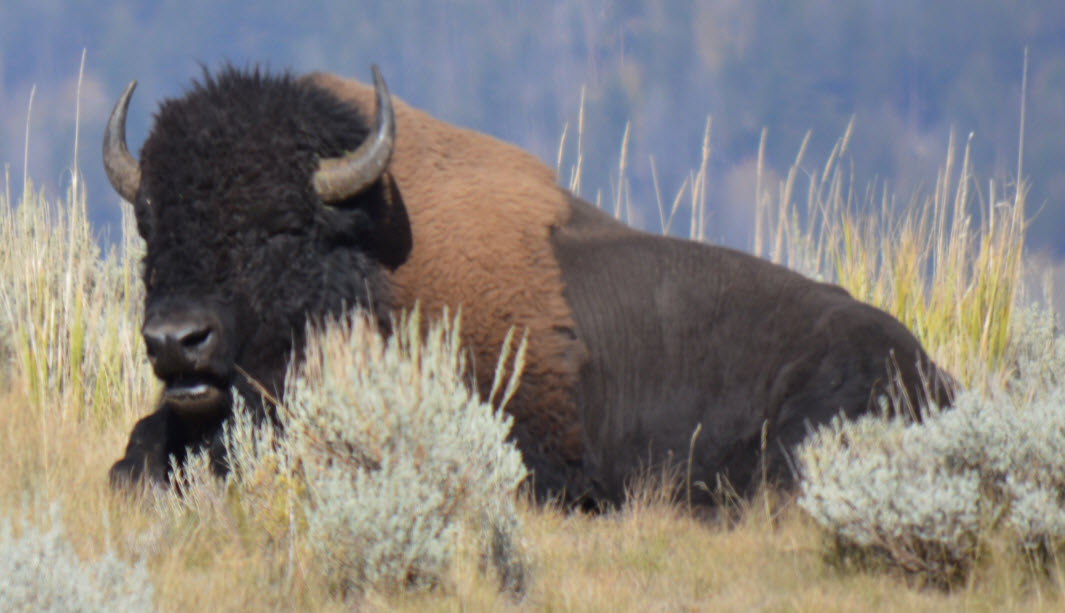
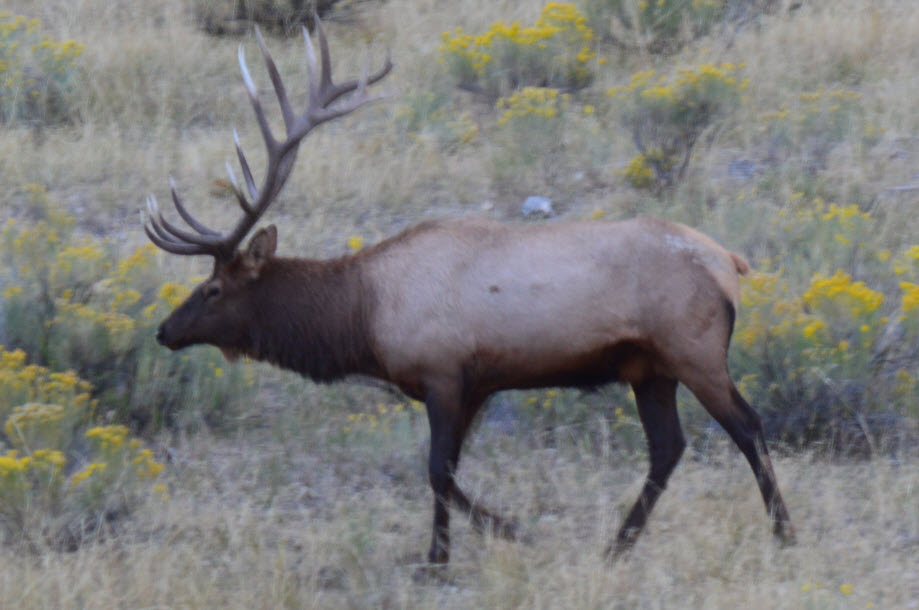
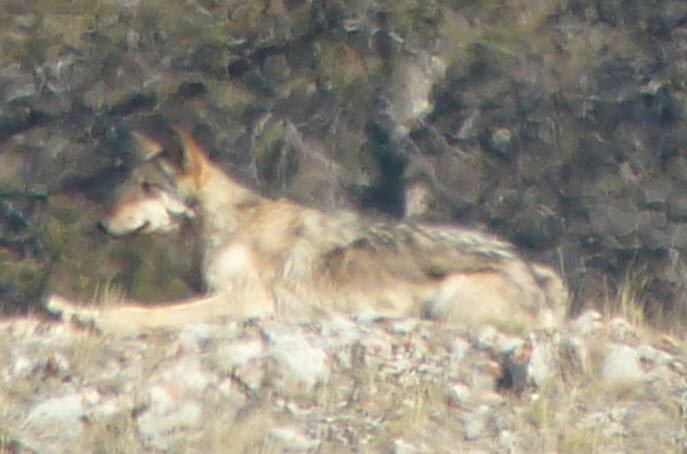
Bull Bison, Bull Elk & Lamar Valley Wolf, Yellowstone, by Steve Hall

Utah & Steve, with one of our personal heros, Author-Activist Bill McKibben at ADK Nature Conservancy Annual Meeting

Come meet our Ambassador Bears & Learn all about Bears
| Home |
Release of
Rehabbed Animals |
Learn
About Adirondack & Ambassador Wildlife |
Critter
Cams & Favorite Videos |
History
of Cree & the Adirondack Wildlife Refuge |