Barred Owl Wolves Ravens Raptors Rehab Refuge
Barred Owls

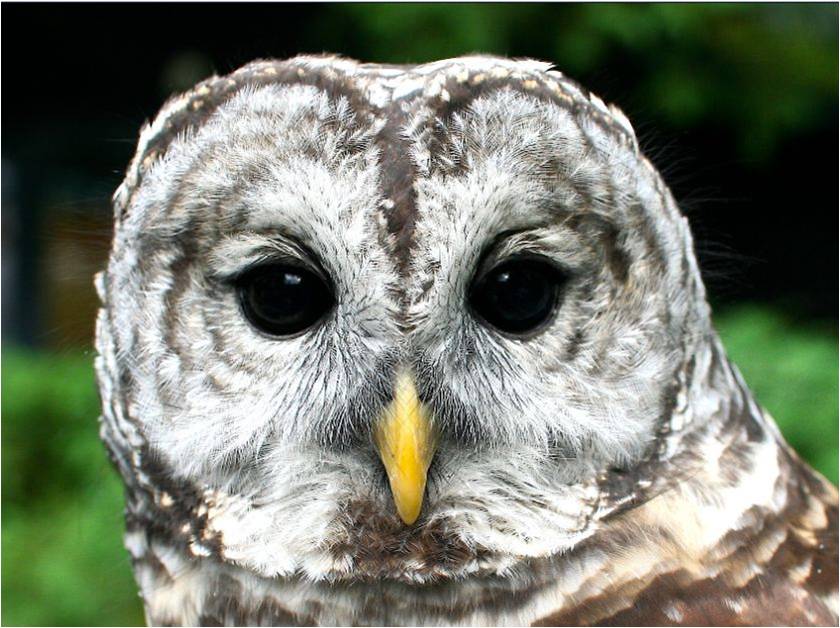
Luna, a barred owl by Bharath Manu

Luna, a two year old male barred owl, was struck by a car in New Hampshire
Photo by Bharath Manu AkkraraVeetil


    Barred Owls

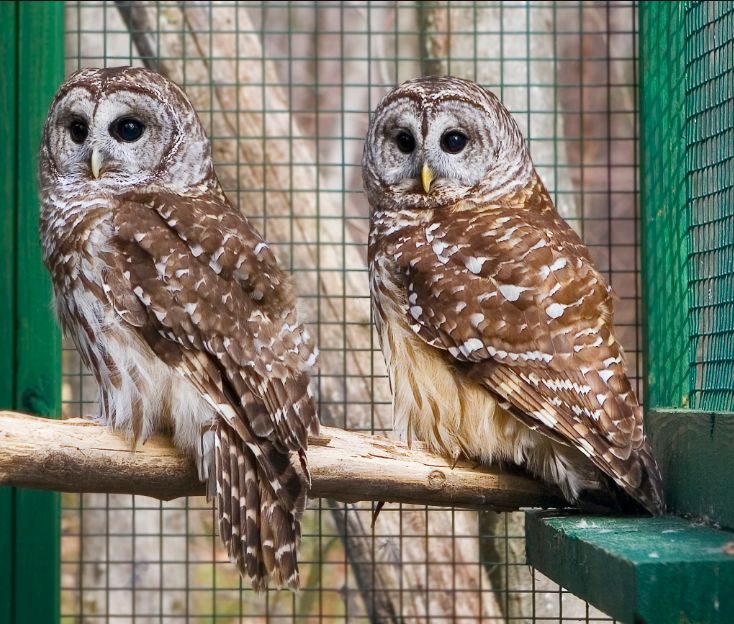
Not to be confused with the barn owl, the barred owl lives up to its name.  Look at its plumage.  It is a medium sized owl that perfectly illustrates the relationships between the sexes in raptors.  You will often see the smaller male standing behind the female at the far corner of the cage, especially if someone enters the cage.   She protects the nest and him, if necessary. in return, when she sits on the eggs, he feeds her.

The feet of the owl are more adaptable than that of any other raptor.  Their toes can position themselves either two in front, two in back like woodpeckers, or three in front, one in back, like most other birds.   This makes perching and grasping prey more fool proof.


The barred owl in very adaptable and will take prey as big as a rabbit or a skunk, though probably not full grown adults.  They eat any other mammal that they can catch and an occasional bird, frog or reptile if they are hungry.   Some barred owls have learned how to catch crayfish in streams, and sport reddish feathers on their breasts as a result. While they are creatures of thick forest and swamps, and prefer to roost in secondary tree cavities, barred owls are very adaptable to the ways of people, are also common in suburban settings, and will nest in a man-made roosting box.

When the Federal government placed the spotted owl, a related species indigenous to the northwest, on the endangered species list back in the 90s, they forgot to tell barred owls, who have been displacing and interbreeding with the spotted owls ever since. To the extent that barred owls prefer old growth forests, they are an indicator species for this type of forest.

Barred owls have a haunting call, which sounds like “who-cooks-for-you, who-cooks for-you-all”. Their principal predator is the great horned owl. The most common causes of death are being struck by cars, and being shot or poisoned. Luna was struck by a car in New Hampshire, Helen by a car in North Carolina. Each of these owls is blind in one eye.


Gary Berke, with kibbitzing by Steve

Luna & Helen by Terry Hawthorne

Luna, left & Helen of Troy, photo by Terry Hawthorne

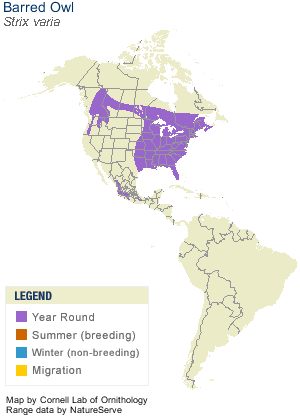
Helen and LunaHelen and LunaHelen and LunaHelen and LunaHelen and Luna flank AexBarred Owl Range
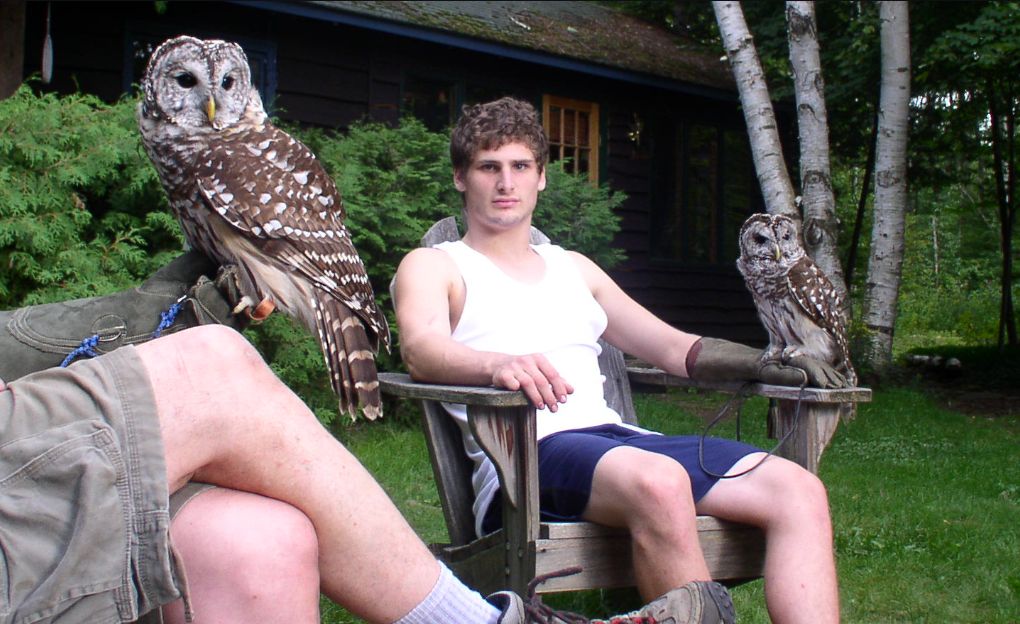
Alex with Helen and Luna
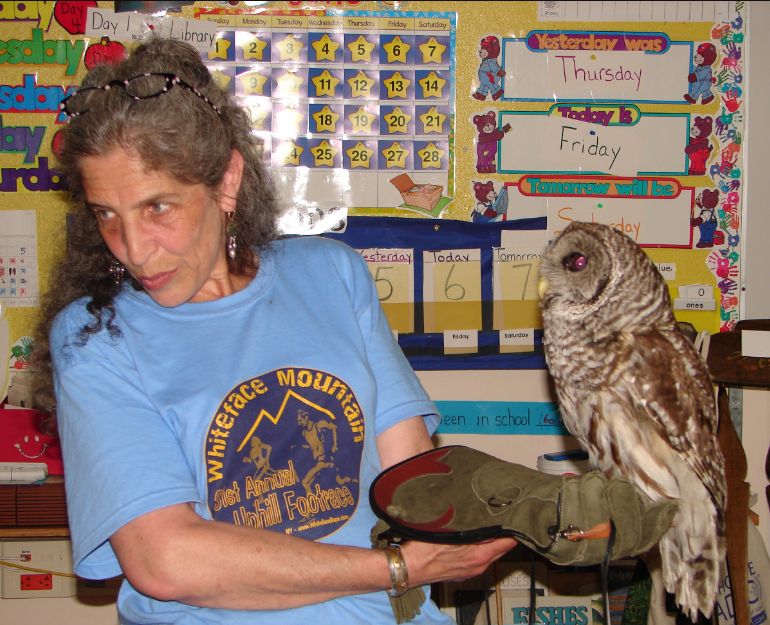
Luna with SteveWendy with Luna
Luna with Steve & Wendy

Meet our Education Birds
Home
Barred
Owl
Great Horned
Owl
Broad
Winged
Hawk
Swainsons Hawk Peregrine
Falcon

Merlin
Raven
Turkey
Vulture


Under Development - Please Come Back Soon

ADK
Artists
Home
ADK
Vacation
Rentals

ADK
Real
Estate

Photographs from Adirondack Habitat Awareness Day

Adirondack Loon Project
Peregrine falcon
Hawks, Falcons & Owls
Adirondack Mountain ClubNature ConservancySteve & Wendy's Home Page Adirondack JourneyThe Carbon Fund
  
Texas AlligatorAransas National Wildlife RefugeAransas National Wildlife RefugeThe Wild Center
Eurasian Eagle Owl in FlightRaptor Rescue & Education CenterCree on the frozen Ausable

North Country Wild CareInternational Wildlife Resource Council

Contact Information
Steve & Wendy Hall
Email: ausable_lodge@yahoo.com
Cell Phone: 914-772-5983
Home: 518-946-2428
Fax: 518-536-9015